





Half of the homes in Lithonia were built in 1974 or earlier, which sounds like a trivia question until you’re standing in an inch of water trying to figure out why it happened in the first place. A house that age has usually been through a repipe, a reroof, maybe a water heater swap or two, but the bones underneath are still old, and old bones behave differently when water gets into them than the ones in a house built last year.
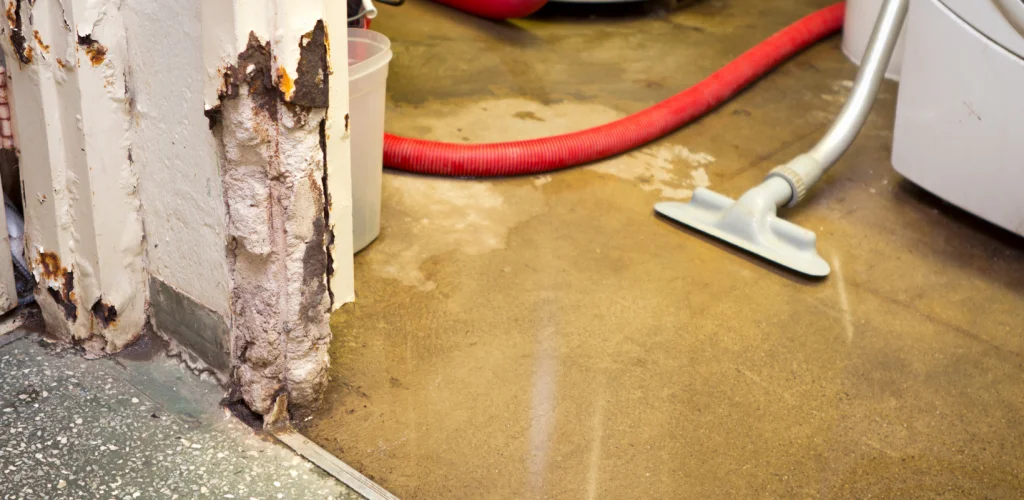
About 63% of Lithonia’s housing stock went up before 1980. That’s not a small pocket of old houses, that’s most of the town. Plumbing from that era is a mixed bag. Some houses got repiped along the way, some didn’t, and you can’t tell which from the curb.
Galvanized supply lines corrode from the inside and you don’t see it until a fitting finally gives. Plaster walls and old lath soak up water and hold it longer than modern drywall does, which means a leak that looks minor on day one can be a bigger problem by day three. Original cast iron drain lines crack with age too, and a slow drain leak under a slab can go unnoticed for a long time before it shows up as a stain or a smell.
The work follows the IICRC S500, which is the standard the restoration trade uses for how water damage jobs get done, from what gets removed to how drying gets verified. For a homeowner, what that means in practice is we’re not guessing at what to pull out and when to stop drying. There’s a process, and it’s documented.
We cut drywall low, usually a few inches above the waterline, because wet drywall wicks moisture upward and insulation behind it holds water like a sponge. If we don’t pull the wet section, it stays damp inside the wall long after the surface looks dry. The EPA’s own guidance says materials dried within 24 to 48 hours will mostly avoid mold growth, so speed matters, but so does actually confirming dryness instead of assuming it.
We take moisture readings through the drying process, not just once, because a wall can feel dry to the touch and still be wet inside the cavity. Here’s something you can check yourself before we ever arrive: press a hand flat against a baseboard or lower wall near the water source. If it feels cool or slightly soft compared to a dry section of the same wall, there’s still moisture in there, standard or no standard.
About 33% of occupied homes in Lithonia are owner-occupied, which means most households here are renting. That changes who we’re talking to on the phone and who’s deciding what gets fixed. If you rent, the property owner or management company usually needs to be in the loop early, since decisions about what gets replaced and how repairs get scheduled often aren’t the tenant’s call alone.
For owners, the decision chain is simpler, but the age of the house still matters. A 1974 home might have had partial updates over the years, and it’s worth knowing which systems are original and which aren’t before water gets into the walls, not after.
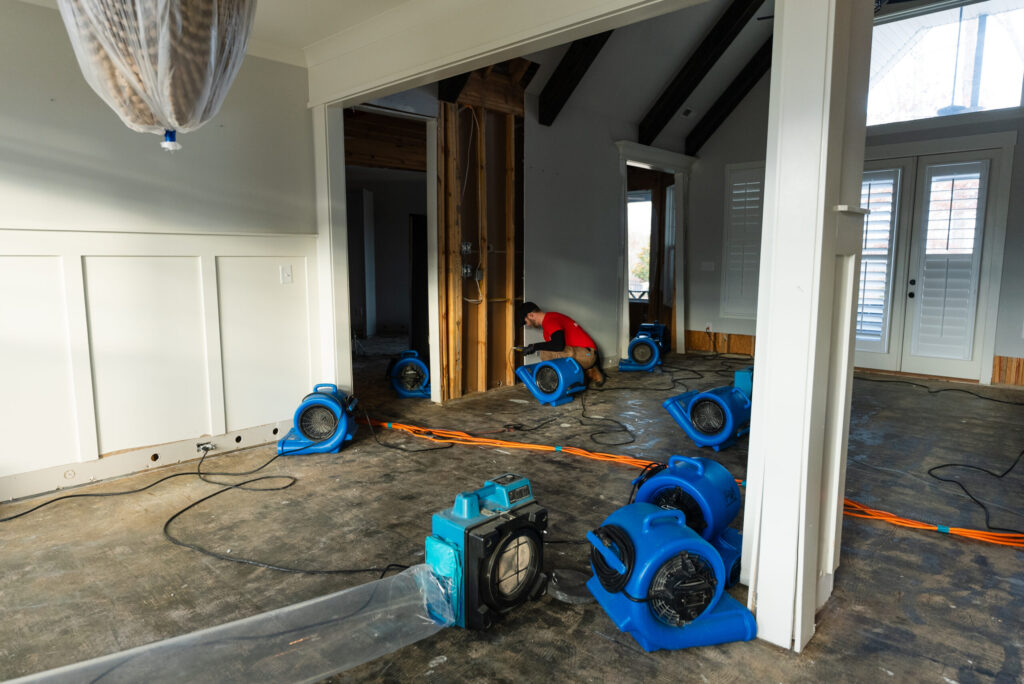
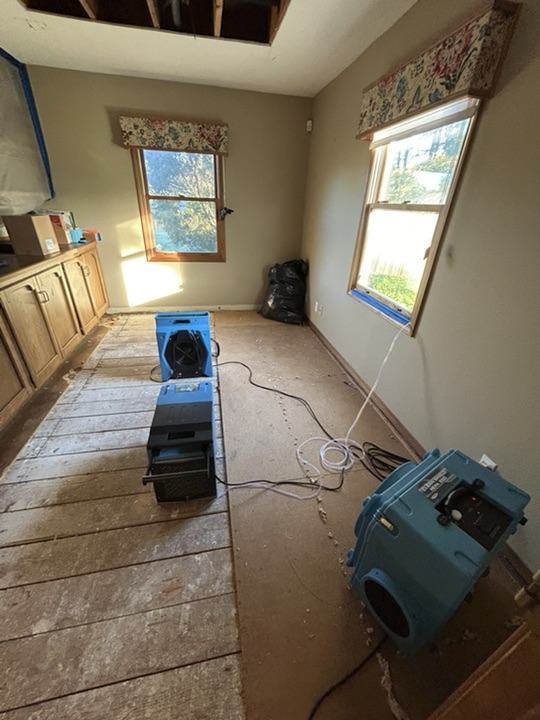
Shut off the water at the source if you can find it, or at the main if you can’t. Know roughly how long the water’s been sitting, since that affects how much has soaked into flooring and drywall. If it’s a plumbing failure, know whether it’s a supply line or a drain line, because that changes how clean or how contaminated the water is.
We answer calls 24/7, so if it’s 2 a.m. and water’s spreading, you don’t have to wait for business hours to start the extraction.
We do. Committed Restoration answers calls 24/7, so a pipe break or water heater failure at 2 a.m. doesn’t have to wait until morning to get attention.
Mitigation is the work that stops damage from getting worse: extracting standing water, removing material that can’t be saved, and drying the structure. Restoration is what comes after, rebuilding what was removed. Mitigation follows the IICRC S500 standard for how that stabilization work should be done.
Wet drywall and the insulation behind it hold moisture and wick it upward, so leaving the soaked section in place keeps the wall damp inside even after the surface dries. Cutting it out, usually a few inches above where the water reached, lets the cavity actually dry instead of staying wet behind a dry-looking surface.
Half of Lithonia’s homes were built in 1974 or earlier, and about 63% predate 1980. Older plumbing, plaster walls, and cast iron drain lines fail differently than modern materials, which is why an older home often needs more material removed, not less.
About 33% of occupied homes in Lithonia are owner-occupied, so most residents rent. Property owners or management companies usually need to be involved early since decisions about repairs and replacement typically go through them.
Sources: US Census Bureau, American Community Survey 2023 5-year estimates; IICRC, ANSI/IICRC S500 Standard; US EPA, A Brief Guide to Mold, Moisture and Your Home. Read 2026-11-14.