




DeKalb County has been named in 11 federal disaster declarations for storms, flooding or fire since 2000, the most recent being Hurricane Isaias in 2026, a severe winter storm the same year, and Hurricane Helene in 2024. That is a county with a real track record of getting hit, and Lithonia sits in the middle of it. If a tree has come through your roof or water is sitting in your den right now, that history is less interesting than what you do in the next few hours, so start there.
First, get everyone away from anything that looks structurally wrong: a sagging ceiling, a cracked rafter, a tree leaning on the roof line instead of sitting flush. None of that is safe to inspect from inside the house.
Second, stop the water from getting worse. A tarp over a hole or a board over a blown-out window does not fix anything, but it buys time, and time is the whole game in storm work. We do emergency board-up and roof tarping, and we answer calls 24/7, so if you are standing in your kitchen at 2 a.m. looking at a hole where your roof used to be, that call still gets picked up.
If a tree is on the house, do not try to move it or cut it yourself to see how bad the damage is underneath. Tree-on-house situations in Lithonia usually mean we are doing two jobs at once: getting the debris off safely and getting the structure stable before anyone goes back inside.
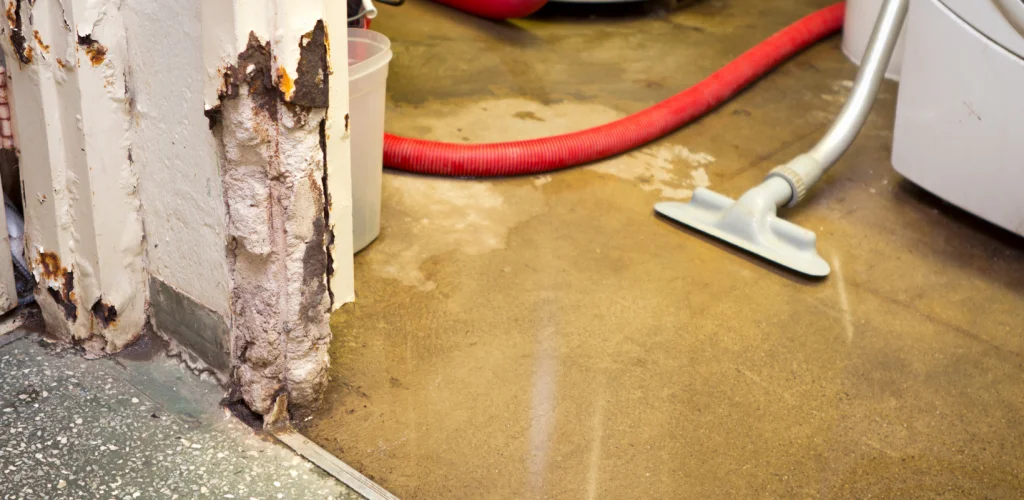
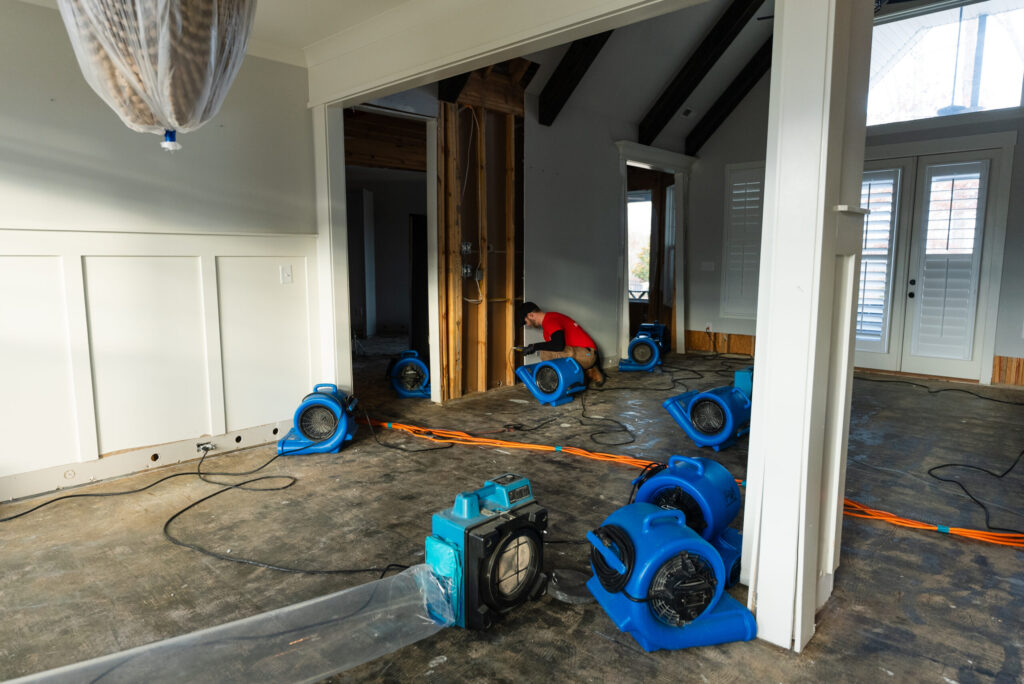
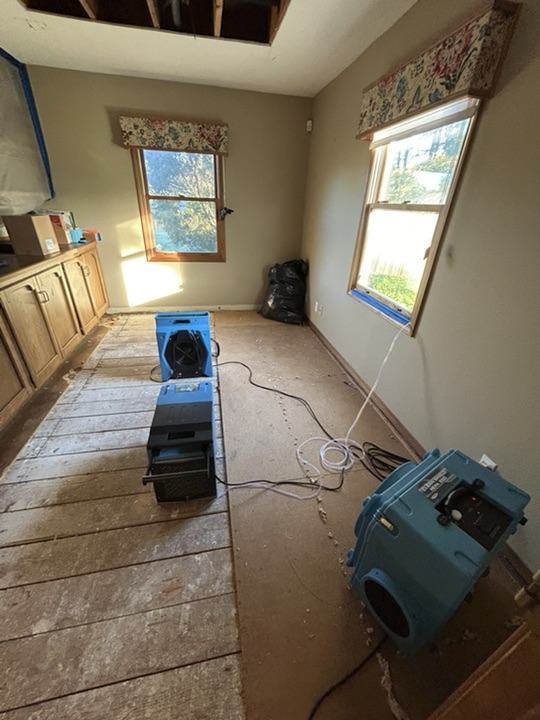
Water damage work in homes and commercial buildings follows the IICRC S500 standard, which is the industry standard for how drying and restoration is supposed to be done, not a guess based on what looks dry. It covers things like how much air movement a wet room needs and how moisture readings get taken, which matters because carpet pad, drywall, and old plaster do not all dry the same way or at the same speed.
The EPA’s rule of thumb is that water-damaged materials dried within 24 to 48 hours will, in most cases, not grow mold. Past that window, you are not just drying anymore, you are often cutting out drywall and insulation that has already started to go soft. A lot of Lithonia’s homes were built in 1974 or earlier, and older plaster and lath holds water differently than modern drywall; it can look fine on the surface while staying wet underneath for days.
One thing you can check yourself, today, before any storm hits: know where your main water shutoff is. If a pipe breaks or a roof leak floods a wall cavity, shutting the water off before anyone arrives can save you a day of drying time.
One more thing worth knowing before you call your insurance company: most homeowners insurance does not cover flood damage on its own. Flood coverage is a separate policy through the National Flood Insurance Program. Whether wind drove rain through your roof versus rising water came in from outside is exactly the kind of distinction an adjuster is going to ask about.
Have your address and a rough sense of what happened, tree on the roof, water in the basement, wind damage to siding. Photos help, even bad ones taken on a phone in the rain. If you know roughly when the damage happened, that matters too, because it ties back to the drying window.
If you have a policy number and your insurance company’s claims line handy, bring that along, but do not feel like you need to have talked to them first. Board-up and tarping often happen before the insurance call does, because stopping more damage from getting in matters more than paperwork order.
About 33% of occupied homes in Lithonia are owner-occupied, which means most households here are renting. That changes who picks up the phone after a storm. A renter dealing with a tree through the roof usually needs to loop in a property manager or landlord before repair work can start, even though the board-up and tarping still need to happen right away regardless of who owns the place. Owners can authorize the full job themselves, from emergency stabilization through structural repair.
FEMA’s records show 51 National Flood Insurance Program claims filed for Lithonia’s ZIP codes, 30038 and 30058, since 2000, with the heaviest single year being 2009 at 18 claims. That is a real number, but it describes the area, not your specific lot. A ZIP code with dozens of claims can include streets that have never flooded and a handful that flood almost every hard rain, and the claims history alone will not tell you which one you are on. If you want more certainty than that, a flood map reading or an on-site look at your drainage and grading will tell you more than a ZIP-wide count ever will.
Committed Restoration handles emergency roof tarping and board-up in Lithonia and answers calls 24/7, so you can get a tarp up whether the damage happens at noon or in the middle of the night.
Get everyone clear of the area, especially anywhere the ceiling or roofline looks sagging or cracked, then call for emergency board-up and tarping rather than trying to move the tree or inspect the damage yourself.
The EPA says materials dried within 24 to 48 hours will, in most cases, not grow mold, which is why getting water out and air moving quickly matters more than how the room looks right after the storm.
Most homeowners insurance does not cover flood damage since flood coverage is a separate policy through the National Flood Insurance Program, which is a distinction worth sorting out with your adjuster before you assume anything is covered.
It can. Half of Lithonia’s homes were built in 1974 or earlier and about 63% were built before 1980, and older plaster, lath, and framing can hold moisture differently than newer drywall construction, which affects how a drying plan gets built.
Sources: US Census Bureau, American Community Survey 2023 5-year estimates; FEMA, OpenFEMA NFIP Redacted Claims; FEMA, OpenFEMA Disaster Declarations Summaries; IICRC, ANSI/IICRC S500 Standard; US EPA, A Brief Guide to Mold, Moisture and Your Home; FEMA, FloodSmart (National Flood Insurance Program). Read 2026-11-14.