





FEMA’s records show 51 National Flood Insurance Program claims filed for Lithonia’s ZIP codes, 30038 and 30058, since 2000, with the worst year, 2009, bringing 18 of those on its own. That number is not nothing, but it is not a forecast either. It tells you water has found its way into homes here before. It does not tell you whether it will find yours.
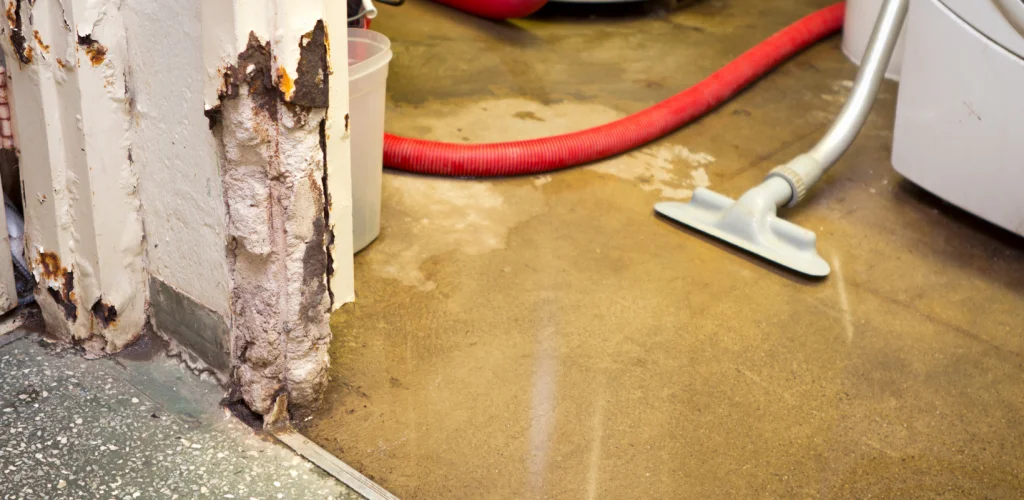
A flood map or a claims count describes an area, not a specific address. Lithonia sits across 30038 and 30058, and the 51 claims filed since 2000 are spread across both, not concentrated on one street or one house. 2009 was the bad year, with 18 claims in that stretch alone, which lines up with the heavy rain that hit a lot of metro Atlanta that spring.
What this means for you: if your house has never flooded, that claims history doesn’t clear you, and if a neighbor’s basement has taken on water twice, that doesn’t mean yours will. Most water damage calls we get in Lithonia have nothing to do with a creek or a flood zone at all. They start with a pipe, a water heater, or a roof that finally gave up. Flood insurance is a separate policy from your regular homeowners coverage, and an adjuster is going to want to know right away whether the water came from a covered plumbing failure or from rising water outside, because that distinction decides which policy, if either, responds.
Water doesn’t wait for you to get home from work. Drywall starts wicking it up the moment it touches, and the paper facing on gypsum board is basically a wick. Subfloor, especially the particleboard and OSB common in a lot of mid-century construction, swells fast and doesn’t always flatten back out once it dries. The EPA’s guidance is that materials dried within 24 to 48 hours will, in most cases, not grow mold. Past that window, you’re often not just drying, you’re also remediating.
The standard we work to is the IICRC S500, which is the industry reference for how water damage jobs should be scoped, dried, and verified. In practice that means moisture mapping before we start, drying equipment placed and monitored against actual readings instead of guesswork, and documentation of the whole process for your records and your adjuster. One thing you can check yourself right now, today: find your main water shutoff valve and make sure it actually turns. Half the delay on a burst pipe call is someone standing in a flooded hallway trying to figure out where the valve is.
Half the homes in Lithonia were built in 1974 or earlier, and about 63% of the housing stock here predates 1980. That matters for a few reasons. Galvanized and early copper plumbing from that era is past its expected service life in a lot of cases, and when it fails it tends to fail at a joint or an elbow, often slowly at first. Older slab and crawlspace construction also doesn’t drain or vent the way current code requires, so water that gets under a house in 1974 construction can sit there longer than it would in something built last year.
Flooring and wall assemblies from that period were also built with different materials. Plaster behaves differently than modern drywall when it’s wet, and original hardwood subfloors react differently than the engineered products used now. None of that is a reason to worry in the abstract. It is a reason to get moisture readings taken rather than assume a wall looks dry because it looks dry.
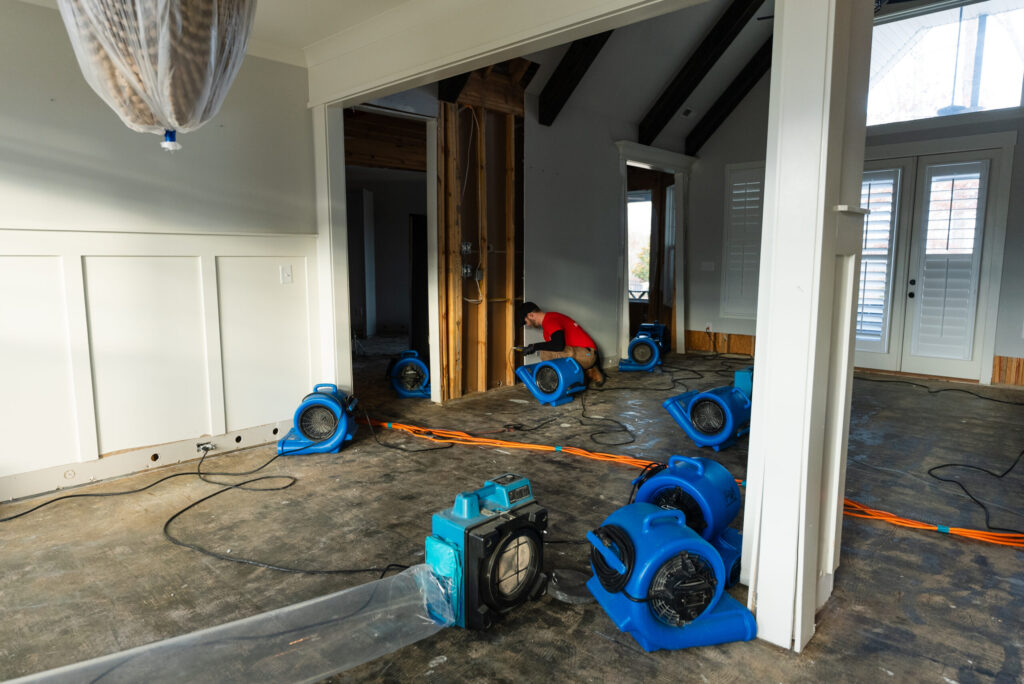
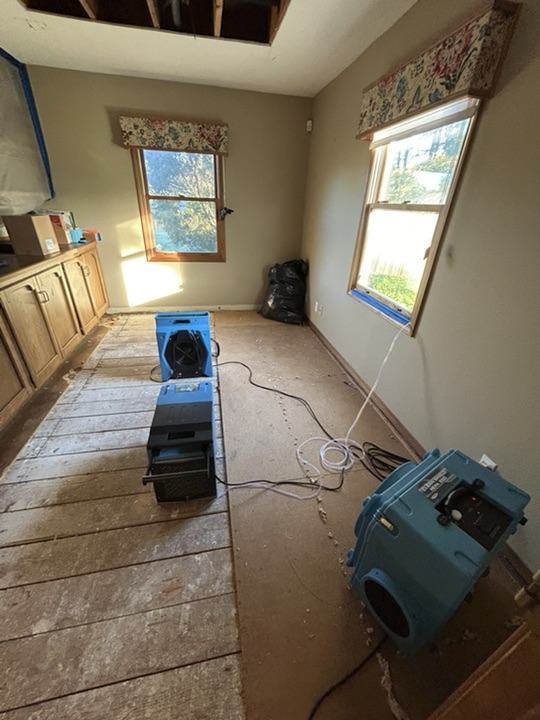
DeKalb County has been named in 11 federal disaster declarations for storms, flooding, or fire since 2000, most recently Hurricane Isaias in 2026, a Severe Winter Storm in 2026, and Hurricane Helene in 2024. That’s a county-wide list, not a Lithonia-specific one, but it says something about how often this area gets hit with weather that causes real water intrusion.
After one of these events, the first few hours matter. If it’s safe, shut off power to any affected area, move what you can off the floor, and get photos of standing water and damaged materials before anything gets touched or dried. Don’t wait to see if it dries on its own. We answer calls 24/7, so if you’re dealing with a flooded basement after a storm or a burst pipe water damage situation at 2am, there’s someone to call rather than a voicemail.
Have your address, a rough sense of where the water is coming from if you know, and whether anyone has turned off the water or power yet. If you have homeowners or flood insurance information handy, that speeds things along, though we won’t be the ones telling you what your policy covers. We’re IICRC certified, which means the drying and documentation follow the same standard an adjuster will expect to see referenced in a report. We handle extraction, sewage and contaminated water cleanup, moisture mapping and monitored drying, and repair of the walls, floors, and finishes that get hit, plus the documentation you’ll want for your own records and for the claim.
Committed Restoration answers calls 24/7, so a flooded basement or burst pipe at night doesn’t have to wait until business hours to get a response.
The EPA says materials dried within 24 to 48 hours will, in most cases, not grow mold, which is why moisture mapping and monitored drying start as soon as a job begins rather than being left to guesswork.
Not necessarily. FEMA’s claims data shows 51 NFIP claims across Lithonia’s two ZIP codes since 2000, but that figure describes the area as a whole, not any single property, and plenty of water damage here comes from plumbing failures rather than flooding.
It can complicate things. Half of Lithonia’s homes were built in 1974 or earlier, and about 63% predate 1980, which means plumbing nearing the end of its service life and building materials, like plaster or original subfloor, that behave differently than modern materials once they’re wet.
It can affect who needs to make the call and who handles documentation, since about 33% of occupied homes in Lithonia are owner-occupied and the rest are rented, so renters may need to loop in a property owner or manager before work starts.
Sources: US Census Bureau, American Community Survey 2023 5-year estimates; FEMA, OpenFEMA NFIP Redacted Claims; FEMA, OpenFEMA Disaster Declarations Summaries; IICRC, ANSI/IICRC S500 Standard; US EPA, A Brief Guide to Mold, Moisture and Your Home; FEMA, FloodSmart (National Flood Insurance Program). Read 2026-11-14.