





Half of the homes in Monroe were built in 1976 or earlier, according to the Census Bureau’s estimate, and that number is useful the moment a water heater lets go at midnight. An older house doesn’t fail the same way a new one does. The materials are different, the plumbing is different, and the clock on how fast things go bad is shorter than most people think.

About 55% of Monroe’s housing stock went up before 1980, which means a lot of this town is still running on original or first-replacement plumbing, plaster or early drywall, and subfloor that has had decades to absorb whatever got spilled on it before anyone called a professional. Galvanized pipe from that era corrodes from the inside and gives out without much warning. Old drywall doesn’t swell and bubble the way newer board does; it wicks water upward quietly, and by the time you see a stain the water has usually traveled further than the stain shows.
That matters for extraction. In a newer house you can sometimes get away with drying in place. In a house built before 1980, the wall cavity, the baseboard, and the subfloor underneath have likely already taken on more water than what you can see from the room.
Wet drywall gets cut from the bottom up, usually a foot or so above the waterline, because that’s where the water sat and that’s where the paper facing starts to break down. Leaving it in place doesn’t save it. It just gives mold a head start in a spot you can’t see.
The work follows the IICRC S500, which is the industry standard for water damage restoration. In practical terms for a Monroe homeowner, it means the drying isn’t done by feel. We take moisture readings in the affected materials and keep taking them until the numbers come back where they should be, not just until the carpet feels dry to the touch. The EPA notes that materials dried within 24 to 48 hours generally won’t grow mold, which is why the speed of the first call matters as much as the equipment that shows up.
One thing you can check yourself today: find your home’s main water shutoff valve before you need it. In a 1976 house that valve may be stiff, corroded, or buried behind something. Knowing where it is and whether it turns is worth five minutes now.
The work runs in order, start to finish:
Answers come 24/7, so emergency water removal in Monroe doesn’t wait on business hours. Water extraction in Monroe on an older house usually takes longer than people expect, because there’s more to check: wall cavities, subfloor, the backside of baseboard. Skipping that step is how a contained leak turns into a mold problem three weeks later.

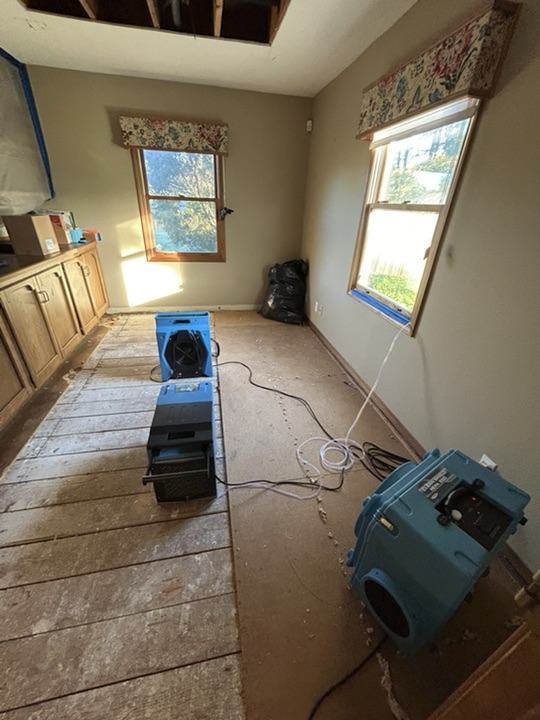
About 40% of occupied homes in Monroe are owner-occupied, which means the majority are rentals, and that changes who’s standing in the kitchen when the water’s rising. A renter may not know where the shutoff is, may not have a say in which contractor gets called, and may be waiting on a landlord or property manager to authorize work. An owner can make the call directly. Either way, the sooner someone with authority says go, the less material has to be torn out later. IICRC certified technicians handle the job the same way regardless of who’s on the lease, but getting the right person on the phone fast is its own kind of mitigation.
Committed Restoration answers calls 24/7, so emergency water removal doesn’t wait until morning. A pipe or water heater doesn’t check the clock, and in an older Monroe house, the longer water sits against plaster or subfloor, the more has to be cut out later.
Mitigation is the work that stops further damage: extraction, removing what can’t be saved, drying equipment, and moisture monitoring until the structure tests dry. Restoration is what comes after, rebuilding what mitigation had to remove. The work follows the IICRC S500 standard, which sets out how that drying and monitoring should be done.
Drywall is cut above the waterline because that section has already absorbed water it won’t fully release, and leaving it in place holds moisture against the wall cavity where you can’t see it. In a Monroe house built before 1980, that cavity often has original plumbing or old insulation that holds water even longer.
It can affect who has authority to approve the work. About 40% of occupied homes in Monroe are owner-occupied, so a majority are rentals, which often means a property manager or landlord needs to sign off before extraction and drying can start.
The EPA says materials dried within 24 to 48 hours generally won’t grow mold, which is why getting extraction and drying equipment going quickly matters more than almost anything else in the first day.
Sources: US Census Bureau, American Community Survey 2023 5-year estimates; IICRC, ANSI/IICRC S500 Standard; US EPA, A Brief Guide to Mold, Moisture and Your Home. Read 2026-11-14.