





Half of the homes in Buford were built in 1994 or earlier, which is the kind of number that sits quietly in a Census table until the day a supply line under your sink finally gives out. A house from that era has had three decades of water heaters, washing machine hoses, and copper fittings doing their job, and none of that lasts forever. When it fails, it rarely announces itself ahead of time.
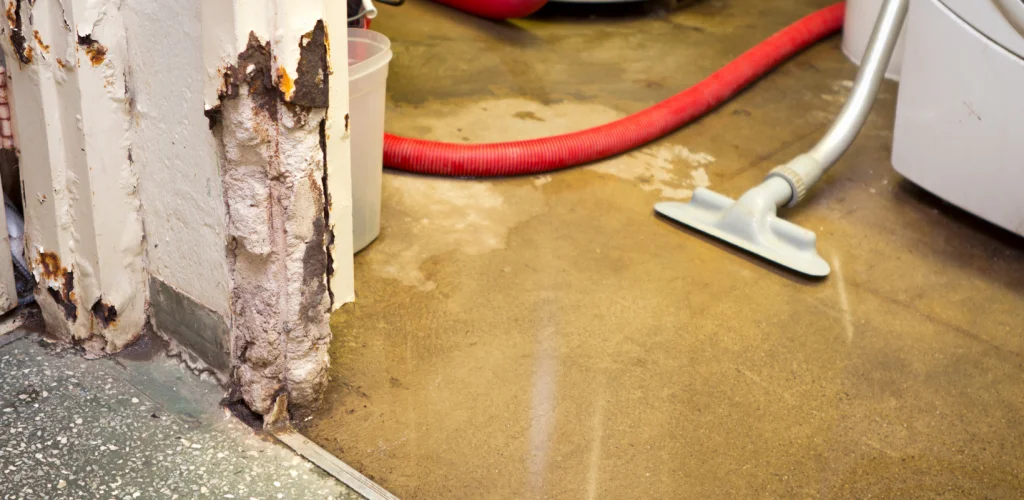
A home built around 1994 is old enough to be on its second or third water heater, and the original supply lines are getting past the point where you’d want to bet on them. About 29% of Buford’s housing stock goes back even further, built before 1980, which means a real share of this town still has galvanized pipe, older cast iron drain lines, or plumbing that’s been patched more than once.
None of that is a reason to panic. It’s a reason to know that when water shows up where it shouldn’t, the house underneath it is probably not new construction with fresh PEX and modern fittings. Older subfloor, older drywall, older insulation. Water moves through all of it faster than people expect, especially into wood subfloor and the paper facing on drywall.
A supply line that lets go, a water heater that splits, a toilet that overflows onto a finished floor: that’s a call-now problem, any hour. Water sitting on wood flooring or wicking up drywall does more damage every hour it’s left alone, and in an emergency a Committed Restoration crew typically arrives within the hour here in Buford.
A slow drip under a sink that you caught early, or a damp spot that’s already stopped growing, can usually wait for daylight. The difference is whether the water is still moving. If it’s still spreading, don’t wait to see how bad it gets.
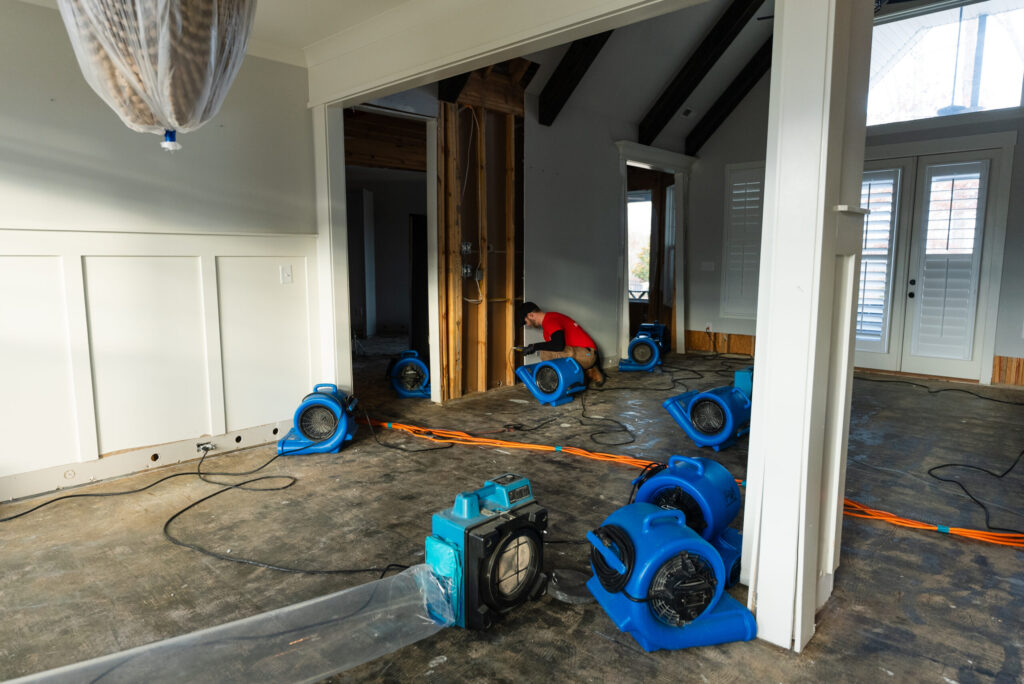
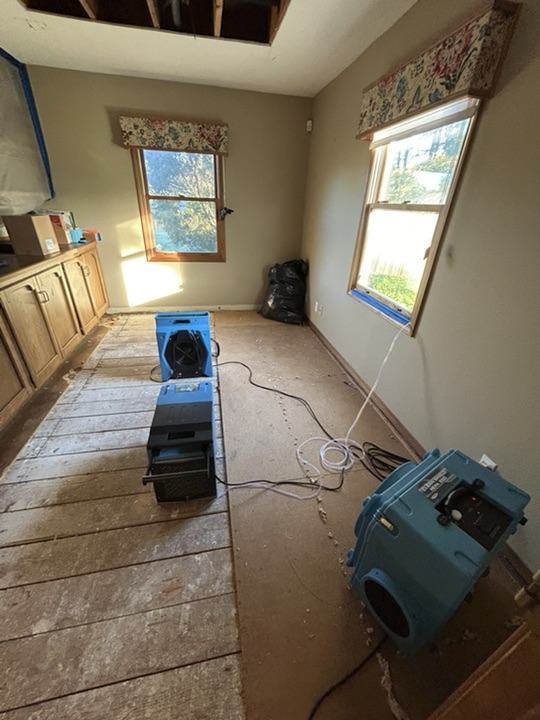
The work follows the IICRC S500, which is the industry standard for water damage restoration. In practice that means pulling out material that’s wet enough it won’t dry in place, drywall soaked past a certain point, insulation that’s absorbed water, carpet pad that’s saturated, and setting equipment to dry out what can be saved. We cut drywall low, near the baseboard, because that’s usually as high as the water wicked, and cutting there lets air move through the wall cavity instead of guessing.
The EPA’s guidance is that water-damaged material dried within 24 to 48 hours usually won’t grow mold. That window is the whole reason for fast extraction and getting equipment running quickly, especially in a Buford house old enough that wall cavities and subfloor have had decades to accumulate dust and organic material mold likes to feed on. We take moisture readings daily until the structure reads dry, not until it looks dry.
One thing you can check yourself: if you’ve had a leak, press on the baseboard or lower drywall a foot or two from where the water was. If it feels soft or spongy, it’s still holding water even if the surface looks fine.
About 70% of occupied homes in Buford are owner-occupied, the rest rented. An owner dealing with a burst pipe is usually the one calling, scheduling the crew, and talking to the adjuster directly. In a rental, the call might come from a tenant, but the property owner or management company is usually the one making decisions about repairs and claims, so figuring out early who’s actually authorizing the work saves time once a crew is on site.
If an adjuster gets involved, one thing they’ll want sorted out is whether the loss is sudden and accidental, like a pipe failure, versus gradual, like a slow leak that went unnoticed for months. That distinction affects how the claim gets handled, and it’s worth asking about early rather than after the drying equipment is already running.
Committed Restoration answers calls 24/7, and our technicians are IICRC certified for water damage restoration. A pipe doesn’t wait for business hours and neither do we.
Mitigation is the work that happens first: extracting standing water, removing material that can’t be saved, and setting equipment to dry the structure before more damage happens. Restoration is the rebuilding that comes after, once the structure is confirmed dry.
Water wicks upward from the floor, so the bottom few inches of drywall usually hold the most moisture even when the surface looks dry. Cutting it out at that line, rather than guessing at the height, lets air into the wall cavity and gets the wet material out instead of leaving it to grow mold.
About 29% of Buford’s housing was built before 1980, and half the homes in town date to 1994 or earlier, so a meaningful share of houses here have original or aging supply lines and water heaters. That’s a citywide estimate from Census data, not a statement about any one house, so it’s worth having your own plumbing checked rather than assuming based on the neighborhood.
The EPA says material dried within 24 to 48 hours usually won’t grow mold, which is why getting extraction and drying equipment started quickly matters more than almost anything else in the first day. After that window, the odds start working against you.
About 70% of occupied homes in Buford are owner-occupied, and an owner can usually authorize work and deal with insurance directly. If you’re renting, the property owner or manager is typically the one who needs to approve repairs, so it helps to loop them in early.
Sources: US Census Bureau, American Community Survey 2023 5-year estimates; IICRC, ANSI/IICRC S500 Standard; US EPA, A Brief Guide to Mold, Moisture and Your Home. Read 2026-11-14.