





Half of the homes in Monroe were built in 1976 or earlier, by the Census Bureau’s estimate, and that fact is not just something for the county records office. It tells us what’s behind the drywall before we ever pull a tool out of the truck. Fire damage restoration in Monroe GA means working on houses with older wiring, older framing, and plumbing that was not built to modern code, and that changes how the job goes from the first hour to the last.

About 55% of Monroe’s housing stock went up before 1980. That generation of house was framed with full-dimension lumber, usually has plaster or early drywall, and in a lot of cases still has the original plumbing runs somewhere in the walls. Fire does different things to that house than it does to something built last year.
Older plaster holds heat and smoke odor longer than modern drywall does. It also tends to crack and separate from the lath when it’s hit with the heat of a structure fire, even in rooms the flames never reached. Old wiring insulation gets brittle over fifty years, and once it’s exposed to fire heat it’s not something you patch, it’s something you replace. And the water used to put the fire out does its own damage, soaking into old subfloor and framing that may already have had some moisture history. None of that is visible from the street. It only shows up once the walls are open.
The IICRC S700 is the industry standard for fire and smoke damage restoration. It sets out how soot and residue should be identified, tested, and removed by type, because wood smoke, protein smoke from a kitchen fire, and synthetic smoke from burning plastics all behave differently on a wall and need different cleaning approaches. Following that standard means the work gets done in an order that actually removes the damage instead of just covering it up with paint and air freshener.
One thing a homeowner can check right now, before anything happens: find your main electrical panel and make sure you know where it is and how to shut it off. After a fire, power sometimes has to be cut before anyone can safely start securing the house, and knowing the panel location saves time that first night.
About 40% of occupied homes in Monroe are owner-occupied, the rest are rentals. That split matters because the person standing in the driveway after a fire isn’t always the one who makes the insurance decisions. On a rental, we’re often coordinating with a property manager or an out-of-town owner, which means documentation and photos become even more important since the decision-maker usually isn’t on site to see the damage firsthand. On an owner-occupied home, the owner is usually there, which speeds up some decisions but doesn’t change how carefully the work has to be documented.

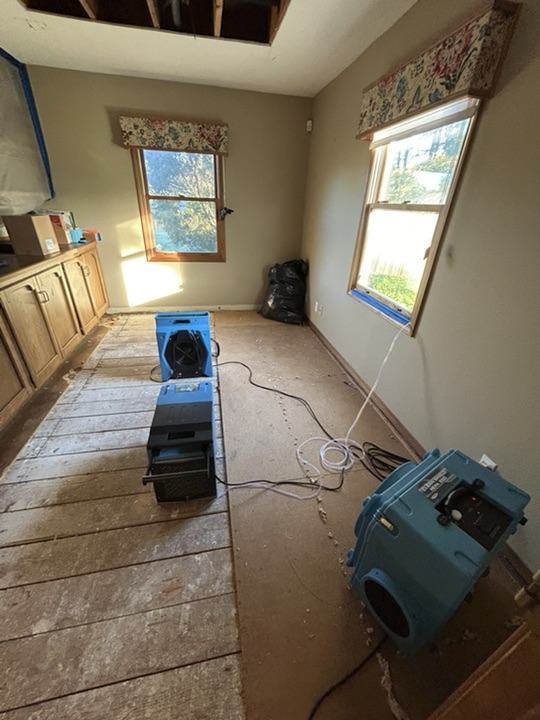
Every fire damage job we do generates a paper trail: photos of the damage before anything is moved, a list of materials removed, moisture readings from the water used to fight the fire, and notes on what was cleaned versus what was replaced. That documentation goes to the adjuster as the claim moves forward. We don’t tell a homeowner what their policy will or won’t pay for, that’s between the homeowner and the carrier, but we do make sure the adjuster has what they need to make that call without a second visit.
A fire restoration company handles it, usually starting with securing the property through board-up and tarping, then removing fire-damaged materials and cleaning up the water used to put the fire out. Committed Restoration is IICRC certified and answers calls 24/7 for fire damage cleanup in Monroe.
The property usually needs to be boarded up and tarped right away to keep weather and anyone uninvited out, since the fire department’s job ends once the fire is out, not once the house is secure. From there it’s removing damaged materials, drying out the water used on the fire, and documenting everything for the insurance adjuster before rebuilding starts.
Often yes, especially items outside the immediate fire zone that picked up smoke and soot rather than flame damage, and the S700 standard calls for cleaning by soot type rather than assuming everything gets thrown out. What’s salvageable versus what needs replacing depends on the material and how close it was to the heat, which is part of what gets assessed and documented early in the job.
Half of Monroe’s homes were built in 1976 or earlier, and about 55% were built before 1980, which means a lot of houses here have original wiring and plumbing that behaves differently in a fire than newer construction. That age is part of why older plaster and wiring often need full replacement rather than patching after a fire.
It can be, since about 40% of occupied homes in Monroe are owner-occupied and the rest are rented, meaning the person on site isn’t always the one handling the insurance claim. Documentation and photos matter even more on a rental so a property manager or owner who wasn’t there can see exactly what happened.
Sources: US Census Bureau, American Community Survey 2023 5-year estimates; IICRC, ANSI/IICRC S700 Standard. Read 2026-11-14.