





Half of the homes in Johns Creek were built in 1995 or earlier, by the Census Bureau’s estimate, which puts this city on the newer end compared to a lot of its neighbors. That matters when you’re on the phone with us at 2 a.m. trying to describe what’s happening in your basement, because a 1995 house fails differently than a 1970s one. The copper is probably still original. The water heater might not be. Either way, water doesn’t care how old the house is once it’s loose under your floor.
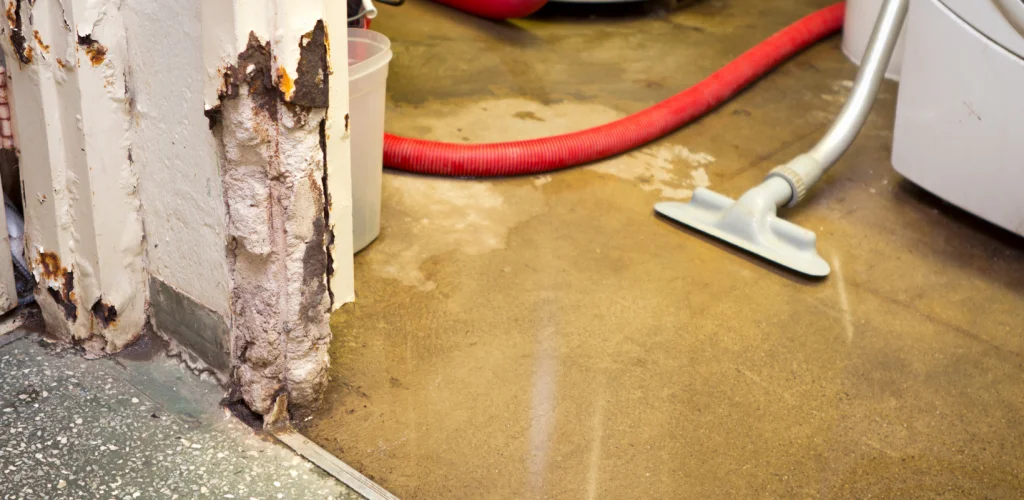
About 4% of Johns Creek’s housing stock was built before 1980, which tells you this is a young city by Georgia standards. Most houses here are post-1990s construction: PVC and PEX supply lines in a lot of cases, OSB subfloor, drywall hung to a more modern standard than you’d find in an older ranch.
That doesn’t make these homes immune to water damage. It changes where the failures tend to show up. Newer homes lean harder on mechanical systems, water heaters, ice maker lines, washing machine supply hoses, HVAC condensate lines, and all of those have a service life that doesn’t care what decade the house was framed. A supply line behind a dishwasher can let go in a ten-year-old kitchen just as easily as a thirty-year-old one. The difference is what’s absorbing the water once it’s on the floor. Engineered hardwood and OSB subfloor swell and delaminate fast when they sit wet, faster in some cases than old-growth lumber subfloor would.
The first thing is getting standing water out, with pumps and extraction equipment, before it spreads further into walls and under flooring. That’s the emergency water removal part, and it’s also where the clock matters most.
From there we pull out whatever can’t be saved. Wet insulation, ruined drywall, carpet pad that’s holding more water than carpet, baseboard that’s already swelling. We’re not guessing at what to cut; we’re reading moisture levels and pulling what’s actually compromised, not stripping a house bare out of habit.
Then equipment goes in. Air movers, dehumidifiers, placed and run based on the size and shape of the affected area, not just lined up and left. We come back and take moisture readings on a schedule until the material readings match dry standard, not until it looks dry to the eye. Looking dry and being dry are two different things, and drywall in particular will look fine days before it’s actually back to normal moisture content.
Water travels up porous material by capillary action, wicking through drywall and framing well above the waterline you can see. That’s why a cut at the baseboard often isn’t enough; the saturation line is usually higher than the puddle was. We follow the IICRC S500 standard for how this gets measured and documented, which is the industry standard for water damage restoration work in homes. For you as the homeowner, it means the drying isn’t based on a gut feeling. It’s based on moisture readings taken with a meter, logged, and compared against the dry standard for that material, and that log is also what an adjuster wants to see if there’s a claim involved.
The EPA’s guidance is that material dried within 24 to 48 hours will, in most cases, not grow mold. That window is short, and it’s the whole reason the emergency call matters more than the daytime one. One thing you can check yourself right now: look under your kitchen sink and behind the washing machine for any dampness or mineral staining on the supply lines. That’s a cheap five-minute look that catches a slow failure before it becomes a 2 a.m. call.
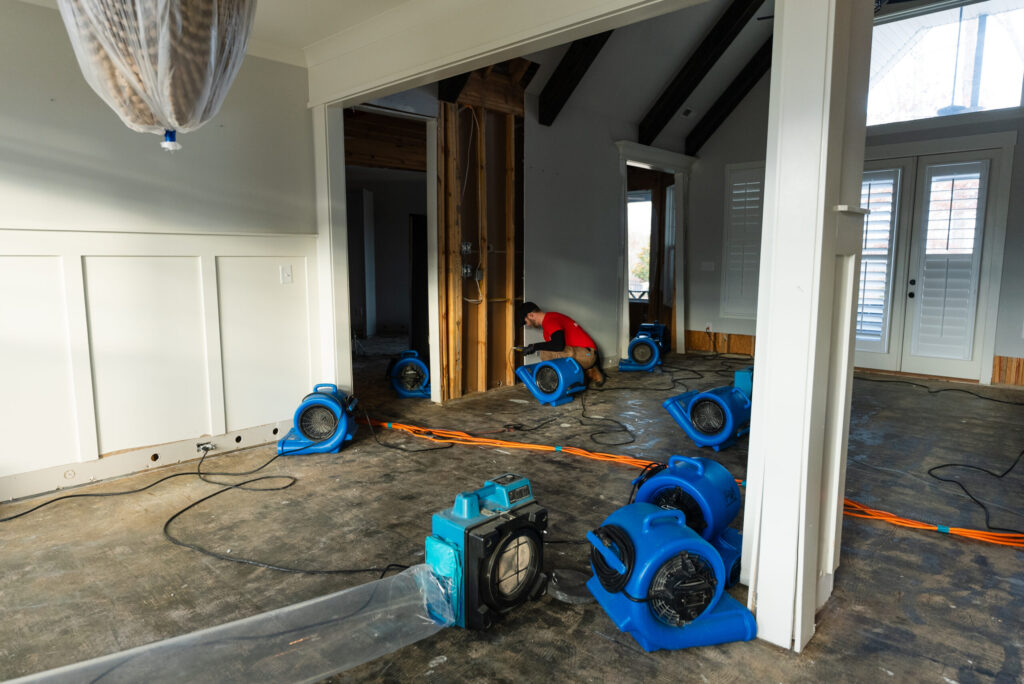
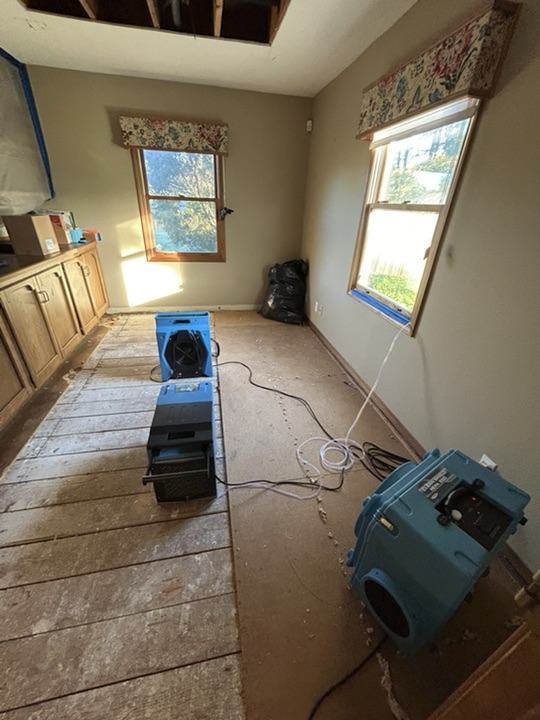
About 80% of occupied homes in Johns Creek are owner-occupied, which usually means the person calling us is the person making every decision on the spot, no landlord to loop in first. That speeds things up on the mitigation side, since we’re not waiting on a second party to approve getting equipment running.
For the roughly one in five homes that are rented, there’s often a property manager or owner who isn’t on-site, and we work around that, but the water doesn’t wait for anybody’s schedule either way. Whoever picks up the phone, we’re there to start extraction and stop the damage from getting worse, 24/7.
We answer calls 24/7, so a burst line or overflowing water heater at 3 a.m. gets the same response as one at noon. Emergency water removal and extraction is the first step before anything else can happen in the house.
Mitigation is stopping the damage from getting worse: extracting water, removing materials that can’t be saved, and drying the structure. Restoration is what comes after, rebuilding drywall, flooring, and finishes once the structure is confirmed dry. We handle the mitigation side, which has to happen before repair work makes sense.
Water wicks upward through drywall past the visible waterline, so the saturated section is usually higher than it looks. We follow the IICRC S500 standard for measuring that, which means the cut line is based on moisture readings, not a guess at where the water stopped.
We take moisture readings with a meter throughout the drying process and keep checking until the material hits a dry standard, not until it looks or feels dry. The EPA notes that material dried within 24 to 48 hours will usually avoid mold growth, which is part of why we monitor closely rather than guess.
It changes what tends to fail rather than whether something fails. About 4% of Johns Creek homes were built before 1980, so most of the city is newer construction, but water heaters, supply lines and appliance hoses fail on their own schedule regardless of the house’s age.
Sources: US Census Bureau, American Community Survey 2023 5-year estimates; IICRC, ANSI/IICRC S500 Standard; US EPA, A Brief Guide to Mold, Moisture and Your Home. Read 2026-11-14.