





Half of the homes in Johns Creek were built in 1995 or earlier, by the Census Bureau’s estimate, and that fact matters the moment a fire is out and the air still smells wrong. A house from the mid-90s has drywall, trim and HVAC runs that have had decades to absorb whatever gets forced into them during and after a fire. Newer houses in the same neighborhood behave a little differently. Either way, the smell doesn’t leave on its own, and what you do in the first day changes how much of the house you keep.

A home built around 1995 has paint, caulk and drywall that are porous by now. Soot particles are acidic, and they etch into these surfaces faster than people expect, sometimes within hours if the fire burned anything synthetic. That’s why a wall that looked fine on day one can show yellowing or a return of the smell by day three.
About 4% of Johns Creek’s housing stock predates 1980, so true old-growth lumber and original plaster are rare here. Most of what we’re working with is modern framing and drywall, which holds odor differently than old plaster does. It takes it in through the paper facing and the seams, and it holds onto smoke in the HVAC system if the fire happened while the system was running or got turned on afterward to clear the air, which actually pushes soot further into the ductwork.
The work follows the IICRC S700, which is the industry standard for fire and smoke damage restoration. In practice that means the cleaning method has to match the type of residue, protein, synthetic, or natural material smoke, not just wipe-and-hope. Protein residue from a kitchen fire needs different chemistry than synthetic residue from burned plastics or electronics, and using the wrong one just smears soot deeper into the surface.
Here’s what you can check yourself tonight: open a return air vent cover and look at the inside edge. If you see gray film or a sooty smell comes up when you pull it open, the HVAC system moved smoke through the house even in rooms that never saw flame. That’s useful information before anyone starts cleaning, and it’s free to check.
About 80% of occupied homes in Johns Creek are lived in by their owners, with the rest rented. On an owner-occupied job, the person living in the house is usually the one making decisions about what gets cleaned versus replaced, and they’re the one dealing directly with the insurance adjuster. On a rental, it often has to go through a property manager or landlord before work starts, which can slow down the first call even if the damage doesn’t wait.
Either way, an adjuster is going to want to know whether the damage is considered restorable versus a total loss on affected materials, that’s a real distinction in how the claim gets scoped, and it’s worth asking about early rather than after cleaning has started.

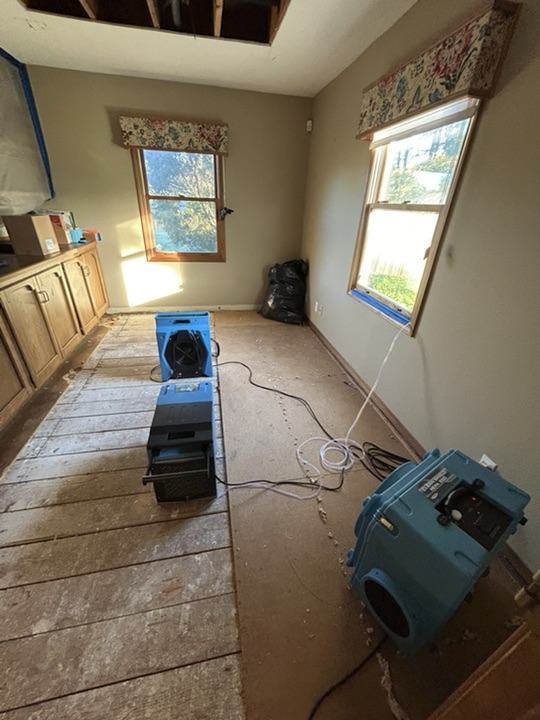
Soot cleanup covers walls, ceilings and contents, cleaned with methods matched to the residue type under the S700 standard. Smoke odor removal goes after the smell itself, which usually means more than air freshening since odor molecules sit inside porous materials, not just floating in the room. Cleaning HVAC-affected areas addresses the ductwork and vents that carried smoke into rooms the fire never touched. And smoke-damaged materials, whether it’s drywall, insulation, or flooring, get either cleaned or replaced depending on how deep the damage goes and whether the material can be restored at all.
Smoke odor removal has to treat the materials holding the smell, not just the air in the room, since smoke particles sit inside porous surfaces like drywall and fabric. That’s one of the services we handle directly, along with soot cleanup on the same surfaces so the odor doesn’t come back once cleaning starts.
Yes, especially through the HVAC system, which can carry soot and odor into rooms far from the fire if it was running during or after the event. Cleaning HVAC-affected areas is part of the job for exactly this reason, and checking a return vent for gray film is a quick way to see if it happened in your house.
It’s risky without knowing the residue type, because soot from a kitchen fire and soot from burned synthetics need different cleaning methods under the IICRC S700 standard, and the wrong approach can smear residue deeper into the material. Wiping with a standard household cleaner is a common way to make a stain permanent instead of removing it.
Yes. Half of Johns Creek homes were built in 1995 or earlier, meaning most have modern drywall and ductwork rather than older plaster, which changes how deep and how fast soot works into the material. Only about 4% of the housing stock predates 1980, so true old-construction jobs are the exception here, not the rule.
About 80% of occupied homes in Johns Creek are owner-occupied, so most of the time the resident is the one deciding and dealing with the adjuster directly. In a rental, that decision usually needs to go through the property manager or landlord before cleaning or replacement work starts.
Sources: US Census Bureau, American Community Survey 2023 5-year estimates; IICRC, ANSI/IICRC S700 Standard. Read 2026-11-14.