





Jackson County has been named in 10 federal disaster declarations for storms, flooding or fire since 2000, and the three most recent, Hurricane Isaias, a severe winter storm, and Hurricane Helene, are a reminder that Braselton gets hit by more than one kind of weather in a given year. Wind takes roofs apart, ice takes down limbs, and a tropical system can dump enough rain in an afternoon to find every weak spot in a house. None of that is new information to anyone who has lived here a few years, but what you do in the first few hours after it happens is what decides whether the repair is a roof and a wall, or a roof, a wall, and a gutted interior.
A straight-line wind event or a hurricane remnant like Helene doesn’t need to be dramatic to open up a house. Shingles lift, flashing pulls loose, a limb punches a hole the size of a dinner plate, and water starts moving into the attic the next time it rains, sometimes before. If a tree has come down on the house, don’t go up on the roof to look. Get people and pets away from the area, especially if there are power lines involved, and call for emergency board-up and roof tarping before you start calling anyone else. A tarped roof and a boarded window are cheap insurance against the next twelve hours of weather doing a second round of damage on top of the first.
If water got in before the roof was covered, that’s a separate problem that starts its own clock, and it doesn’t wait for the storm cleanup crew to clear the yard first.
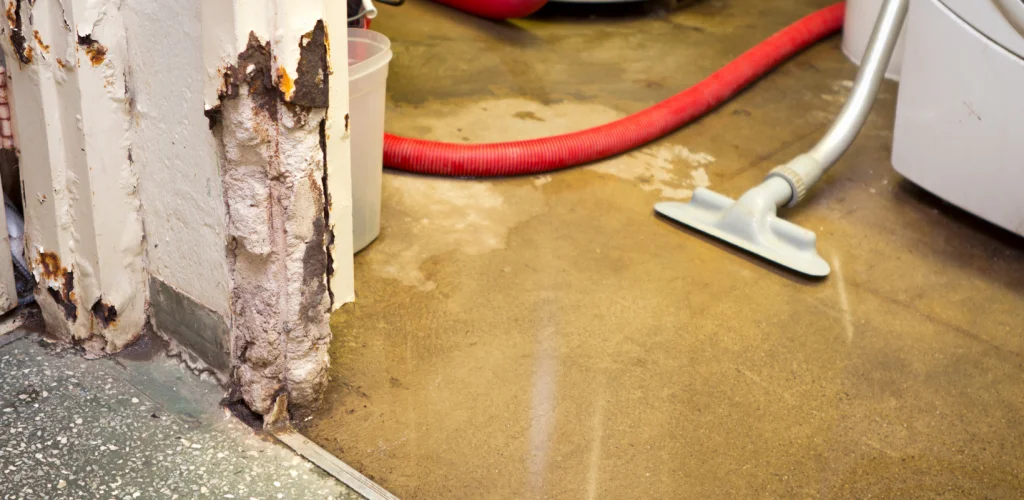
Cleanup after fallen trees and debris gets the yard and the roof deck looking normal again, but the water that got in during the storm is doing its own damage on a different timeline. Wet drywall, wet insulation, and wet subfloor start supporting mold growth once they’ve stayed wet past a certain point. The EPA’s guidance is that materials dried within 24 to 48 hours will, in most cases, not grow mold. Past that window, the odds shift, and they keep shifting the longer things stay damp.
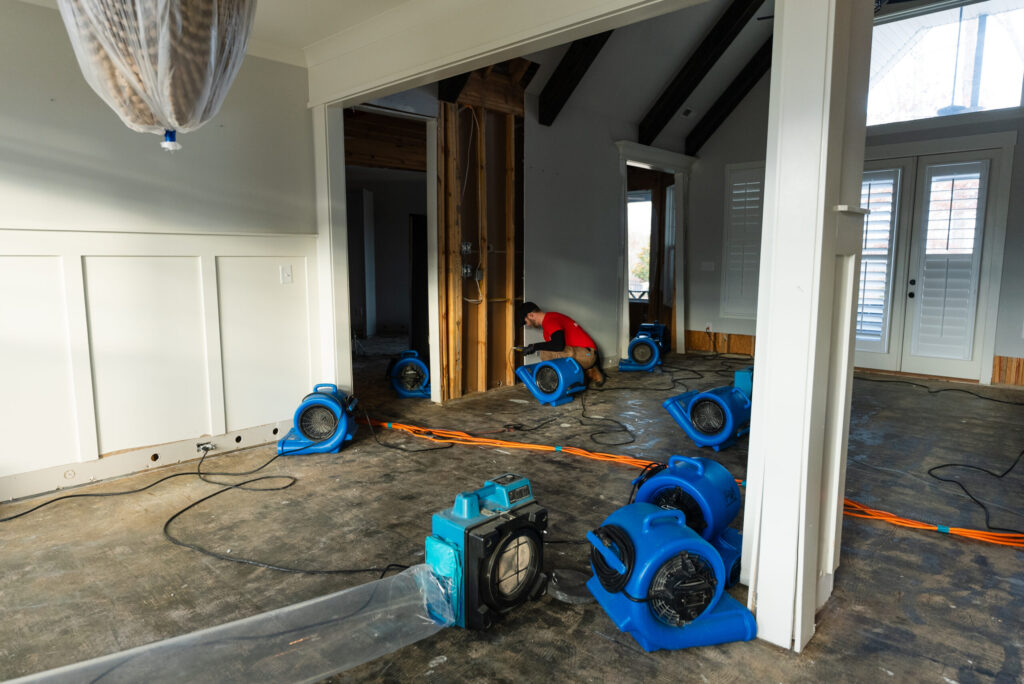
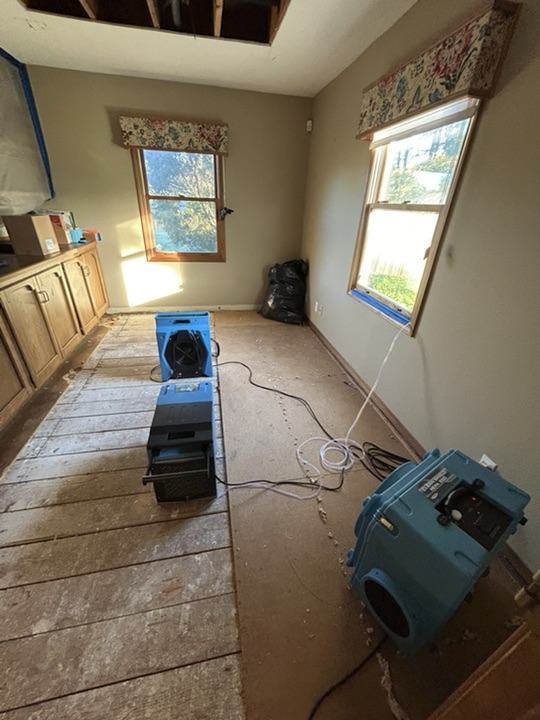
Water removal after storm intrusion and the drying work that follows it is done to the IICRC S500, which is the industry standard for water damage restoration. In practice that means documented moisture readings, not a guess based on how the carpet feels underfoot, and a drying plan that doesn’t get called finished until the numbers say so. One thing you can check yourself today: press a palm flat against a ceiling or wall near where a leak happened and see if it’s cool or soft compared to the dry sections. That won’t tell you what’s happening inside the wall cavity, but it’s a start, and it’s free.
Worth saying plainly: most homeowners insurance does not cover flood damage on its own. Water that blew in through a hole in the roof is usually a different conversation with your adjuster than water that rose up from outside, and that distinction tends to come up early in the claim.
An adjuster is going to want to know when the damage happened, what caused it, and what was done to prevent it from getting worse. Photos of the hole, the tarp, the water line, and the debris before cleanup starts are worth more after the fact than they seem at the time. Committed Restoration is IICRC certified and documents the work as it happens, moisture readings, photos, drying logs, which gives you something concrete to hand over rather than a memory of what the living room looked like three weeks ago. We don’t tell you what your policy will pay. That’s between you and your adjuster. What we can do is make sure the record of the damage and the repair is clear enough that the conversation goes faster.
About 76% of occupied homes in Braselton are owner-occupied, which means for most storm jobs here, the person on the phone with us is also the one who decides on the repair plan and talks to the insurance company. For the remaining homes, we’re often coordinating with a property manager or landlord on scheduling and approvals, which can slow down the decision on anything beyond the emergency tarp and water removal. If you’re renting and a tree has come through your roof, get the property owner on the phone as soon as the immediate safety issue is handled. The board-up and tarp don’t wait on that conversation. The rest of the repair usually does.
FEMA’s records show 3 National Flood Insurance Program claims filed for ZIP code 30517 since 2000. That’s a small number, and it describes the ZIP code as a whole, not any one address. A low claim count doesn’t mean a particular lot doesn’t sit low, drain poorly, or back up next to a creek that rises fast in a heavy rain. It just means flood claims haven’t been common here historically, which is different from saying flooding can’t happen on a given property. Most of what we see in Braselton after a storm is wind and tree damage opening a house up to rain, rather than rising floodwater, but a thorough gutter and grading check after a heavy storm season is still worth doing regardless of what the claims numbers say.
Committed Restoration handles emergency board-up and roof tarping and answers calls 24/7, so you’re not waiting until business hours to get a hole covered before the next round of rain.
Get everyone clear of the area, especially near any downed power lines, and call for emergency board-up and roof tarping before dealing with the tree itself; cleanup after fallen trees and debris comes next, and structural repairs follow once the house is secure and dried out.
Most homeowners insurance does not cover flood damage, which is typically a separate policy, so whether your damage is covered often comes down to whether the water came in through storm damage to the roof or walls versus rising water, a distinction worth raising with your adjuster directly.
The EPA says materials dried within 24 to 48 hours will, in most cases, not grow mold, which is why water removal starts as soon as it’s safe to get into the house rather than waiting for the rest of the storm cleanup.
FEMA records show only 3 NFIP flood claims for ZIP code 30517 since 2000, which suggests flooding hasn’t been a frequent issue here, though that figure covers the whole ZIP code and doesn’t rule out drainage or creek problems on a specific property.
Sources: US Census Bureau, American Community Survey 2023 5-year estimates; FEMA, OpenFEMA NFIP Redacted Claims; FEMA, OpenFEMA Disaster Declarations Summaries; IICRC, ANSI/IICRC S500 Standard; US EPA, A Brief Guide to Mold, Moisture and Your Home; FEMA, FloodSmart (National Flood Insurance Program). Read 2026-11-14.