





Half of the homes in Johns Creek were built in 1995 or earlier, by the Census Bureau’s estimate, and that number earns its keep the night you’re standing in a smoke-filled kitchen wondering what happens next. A house from the mid-90s was framed, wired, and plumbed to codes and habits that have shifted since. That doesn’t make the house unsafe. It does change what a fire does to it, and what has to happen before anyone starts putting rooms back together.
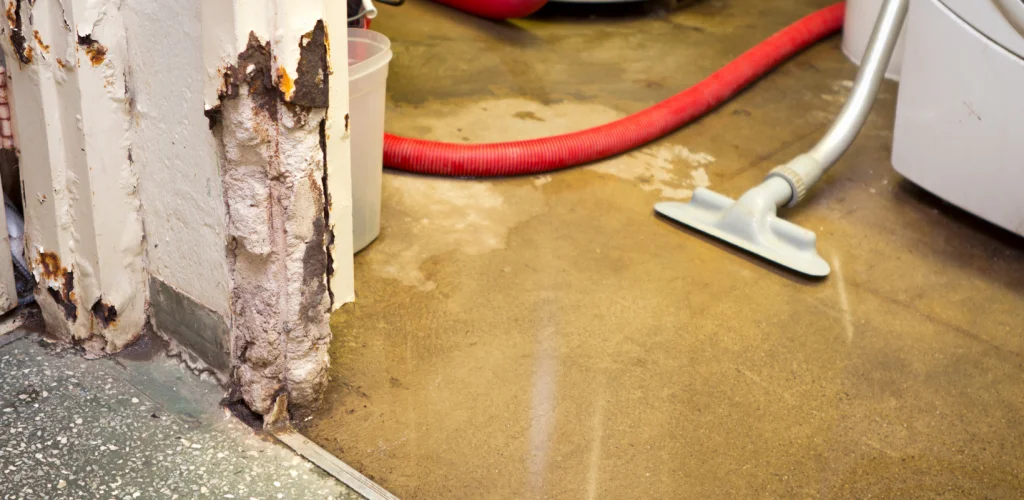
Most of Johns Creek’s housing stock sits in that 1995-and-earlier band, with a smaller slice, about 4 percent, built before 1980. That matters because building materials and wiring methods changed a fair amount over those decades. Drywall from that era chars and crumbles differently than newer board. Older cabinetry and trim often carry heavier coats of oil-based paint, which holds smoke odor longer than modern finishes.
Smoke doesn’t stay where the fire started. It rides heat up through return air and wall cavities, and it settles as soot on anything cooler than the air around it, which in practice means every surface in the house. In a kitchen fire specifically, grease-laden smoke is sticky and acidic, and it starts etching metal and glass within hours if nobody touches it. The older the finishes, the faster that etching shows.
Fire and smoke restoration work in Johns Creek follows the IICRC S700, the industry standard for how this kind of job gets assessed and done. For a homeowner, what that means in plain terms is that the cleanup isn’t guesswork: there’s a set order to securing the structure, removing what can’t be saved, cleaning what can, and documenting the condition before and after. It’s the same standard whether the house was built in 1995 or last year.
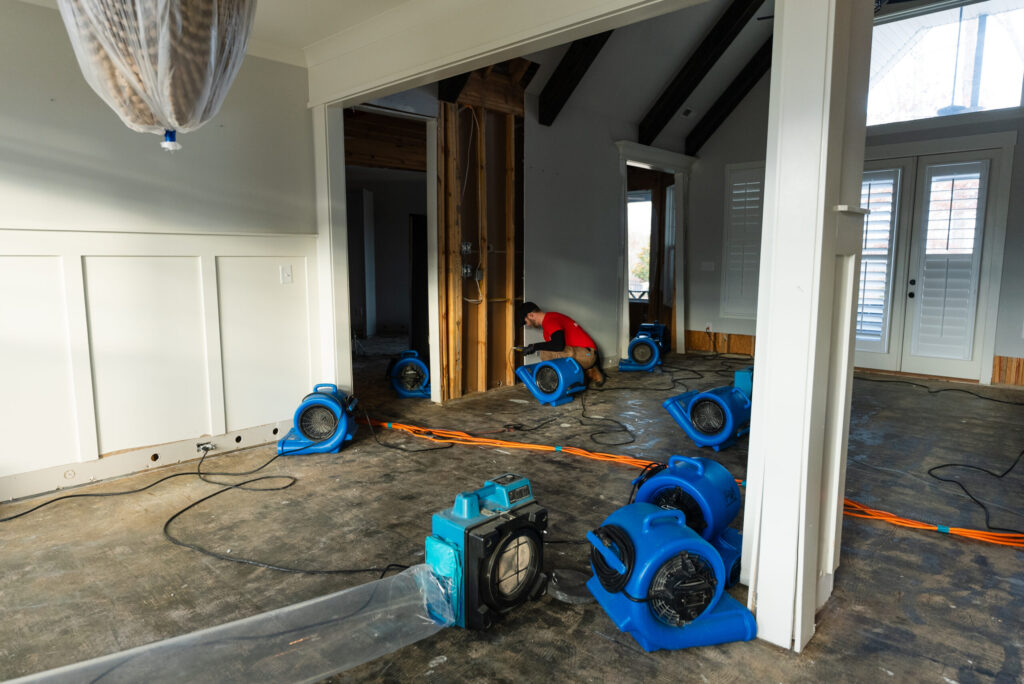
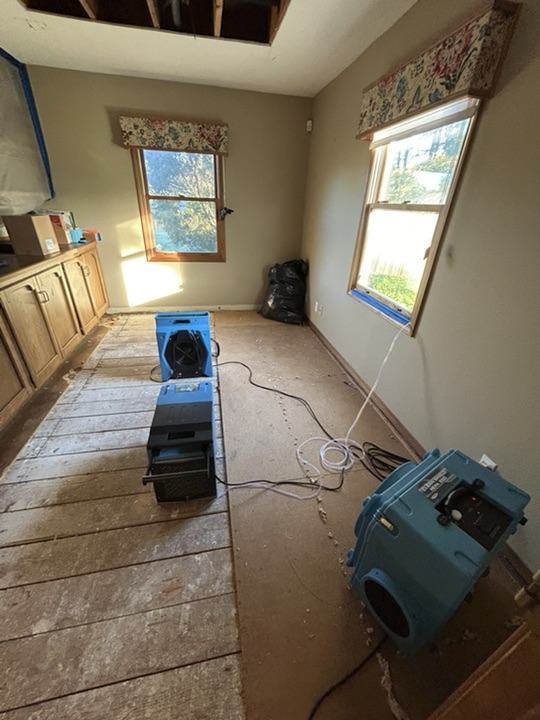
Our process starts with boarding up and tarping to secure the property, then removing fire-damaged materials that are beyond saving, then cleaning up the water the fire department used to put the fire out, and finally rebuilding the affected rooms. Documentation for the adjuster runs alongside all of it.
One thing you can check yourself tonight, if it’s safe to go back in: look at light switch plates and outlet covers near the fire area. If they’re warm, discolored, or melted even slightly, don’t use that circuit, and mention it specifically when you call. It’s a small thing, but it tells a restoration crew something about how hot that part of the house got.
About 80 percent of occupied homes in Johns Creek are owner-occupied, the rest rented. That split changes the shape of the first phone call. An owner is usually the one making decisions about the rebuild and dealing directly with the insurance adjuster. A renter’s first call is often to the property manager or landlord, and the owner of record is who we need on the documentation.
Either way, adjusters generally distinguish between damage caused directly by the fire and damage from the water used to fight it, since those can be handled differently on a claim. We don’t speak to what a policy covers. We just make sure both kinds of damage get documented clearly enough that the adjuster isn’t guessing.
Have your insurance information and policy number if you can find them, though it’s not the end of the world if you can’t put your hands on them right away. Know roughly where the fire started and whether the fire department used water, foam, or both. If you can safely take a few photos of the damage before anything gets moved or boarded up, that helps. And if anyone was displaced from the home, have a way to reach whoever will be making decisions about the property, since rebuild choices often need a quick answer.
We answer calls 24/7, so there’s no need to wait for morning to start the conversation, even if the work itself starts once it’s safe to begin.
A restoration company handles it, covering board-up and tarping to secure the property, removal of fire-damaged materials, cleanup of the water used to fight the fire, and rebuilding the damaged rooms. Committed Restoration is IICRC certified and answers calls 24/7.
The property needs to be secured first, usually with board-up over openings and tarping over damaged roof sections, since an open house invites weather and trespassers. After that comes removing anything too damaged to save, cleaning up firefighting water, and documenting the damage for the insurance adjuster before rebuilding starts.
Often yes, though it depends on how close materials were to the flame and how long smoke sat on them. Fire restoration work follows the IICRC S700 standard, which lays out how to assess what can be cleaned versus what has to be removed, and a trained crew makes that call room by room rather than writing off the whole kitchen.
It can. About 4 percent of Johns Creek homes were built before 1980, and older finishes, like oil-based paint on cabinetry and trim, tend to hold smoke odor longer and need different cleaning approaches than newer materials. A house’s age doesn’t tell you how bad a specific fire was, just what to expect from the materials involved.
About 80 percent of occupied homes in Johns Creek are owner-occupied, so a fair number of calls come from renters who need to loop in a property manager or the property owner, since the owner of record is typically who the restoration documentation and insurance claim are tied to.
Sources: US Census Bureau, American Community Survey 2023 5-year estimates; IICRC, ANSI/IICRC S700 Standard. Read 2026-11-14.