





Half of the homes in Johns Creek were built in 1995 or earlier, by the Census Bureau’s estimate, and that fact is more useful than it sounds the day you’re standing in a wet hallway deciding what to do next. A mid-90s house isn’t ancient, but it’s old enough that the first owner’s choices in plumbing, subfloor and trim are still in there doing their job, or failing to. When we get called out for reconstruction after water damage in Johns Creek, that build era shapes almost every decision we make before we even open a wall.
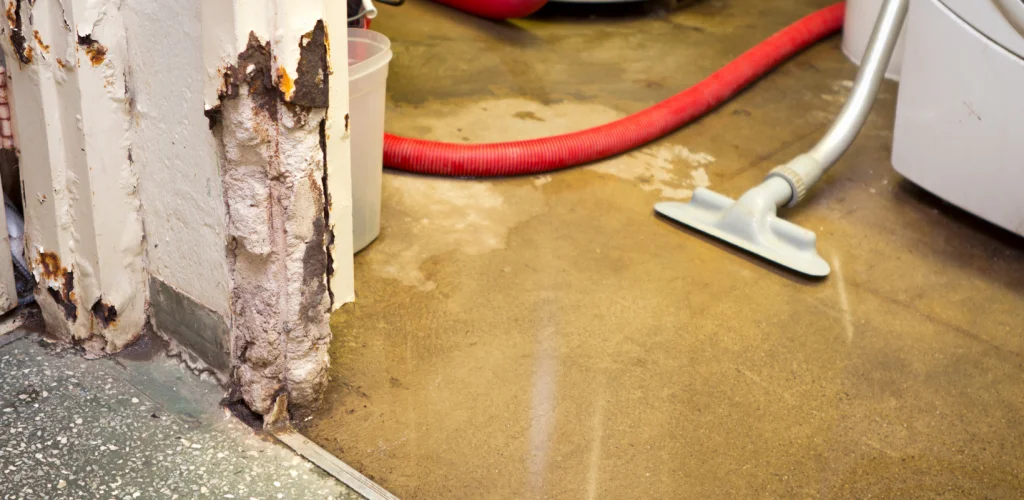
A home from 1995 typically has PVC or copper supply lines rather than the galvanized steel you’d find in something from the 1960s, which is some good news. But it also means a lot of particleboard underlayment, builder-grade plywood subfloor, and drywall hung straight over studs with minimal vapor barrier in places. Water doesn’t care how new the house is relative to Atlanta’s growth, it cares what it’s sitting on. Particleboard swells and crumbles within a day or two of real saturation. Plywood subfloor delaminates more slowly but loses its structural strength from the inside before it ever looks bad on top.
About 4% of Johns Creek’s housing was built before 1980, so true old-house problems, plaster walls, knob-and-tube wiring, cast iron drain lines, are the exception here rather than the rule. Most jobs we take on are dealing with newer materials that fail in newer ways: engineered flooring that can’t be dried in place, vapor barriers that trap moisture instead of blocking it, HVAC closets tucked into finished space where a slow leak goes unnoticed for weeks. Our work follows IICRC standards for water and fire restoration, which matters here because it sets the actual moisture and drying benchmarks a job has to hit before we close up walls again, not just a visual guess that things look dry.
About 80% of occupied homes in Johns Creek are owner-occupied. That changes how a reconstruction job moves. An owner can authorize work, meet an adjuster, and sign off on a rebuild plan the same day we walk the site. A renter generally can’t, and has to loop in a landlord or property manager first, which adds a step even when the damage is urgent.
With owner-occupied housing this dominant, we’re usually dealing directly with the person who lives there and has the most at stake in getting the rebuild right, not just fast. That’s useful on the insurance side too. An insurance restoration contractor and an adjuster will both want to know whether damage is sudden and accidental versus gradual, since that distinction drives how a claim gets handled, though we won’t tell you what your policy will or won’t pay. We document conditions as we find them so that conversation has something solid behind it.
Some situations in Johns Creek can’t wait: an active leak you can’t shut off, water near an electrical panel, a fire with structural damage to a wall or roof, or any standing water that’s been sitting more than a few hours. In a mid-90s house, that particleboard underlayment we mentioned starts failing fast, so a delay of even one night can turn a flooring repair into a subfloor replacement. We answer calls 24/7, so if something is actively getting worse, call rather than wait and see.
Other things genuinely can wait until morning. A small stain on a ceiling that isn’t growing, a musty smell with no visible source, minor smoke odor from a contained kitchen fire. Those are worth a careful look in daylight before you decide whether it’s a repair or a full reconstruction job. One thing you can check yourself right now: go find your main water shutoff and make sure you actually know where it is and that the valve turns. Half the panic in a burst pipe call is people hunting for a valve they’ve never touched.
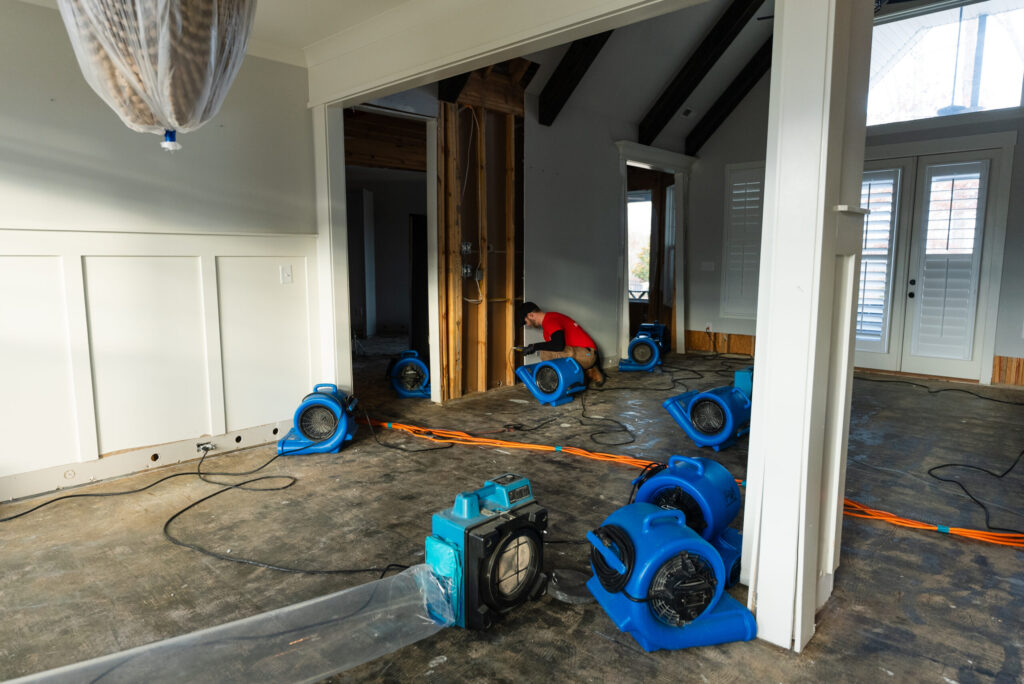
Committed Restoration handles the rebuild, not just a separate cleanup crew that hands you off to someone else. We do structural repairs after water, fire or storm damage along with the drywall, flooring and interior finishes that come after.
Yes, that’s how we’re set up to work, as one team from cleanup through rebuild rather than passing the job to a different contractor once the demolition is done.
Only about 4% of Johns Creek’s housing was built before 1980, so most homes here have newer supply lines and electrical than you’d find in an older town, though any individual house can still have had past repairs or additions that don’t match the rest.
Generally no. About 80% of occupied homes in Johns Creek are owner-occupied, and renters typically need to involve the landlord or property manager before reconstruction work can be authorized.
We work as an insurance restoration contractor and document conditions for the claim, including whether damage appears sudden versus gradual, since adjusters ask about that distinction, but we can’t tell you what your specific policy covers.
Sources: US Census Bureau, American Community Survey 2023 5-year estimates. Read 2026-11-14.