





Lawrenceville runs its own stormwater utility, separate from the county, and it publishes GIS maps so residents can look up drainage on their own street. That is a useful tool. It will not tell you whether your basement is going to take on water this year, but it will show you where the pipes and culverts run near your lot, which is more than most homeowners ever check. If you are already standing in it, the map can wait. Call us first.

FEMA’s records show 151 National Flood Insurance Program claims filed for Lawrenceville’s ZIP codes (30043, 30044, 30045, 30046) since 2000, with the worst year, 2009, bringing in 97 of those on its own. That number covers four ZIP codes and more than two decades. It tells you flooding happens here in a bad year, sometimes a very bad year, but it does not tell you a thing about your specific house. A house on high ground two streets from a creek carries a different risk than one backed up to a drainage easement, and the citywide claims count cannot sort that out for you.
The stormwater GIS maps are closer to useful because they show actual infrastructure, not just a flood zone outline. Pull up your address, look at where the storm drains and creek lines sit relative to your foundation, and you will know more than the claims number alone can tell you. It still will not predict a burst pipe in your laundry room, which has nothing to do with creeks at all.
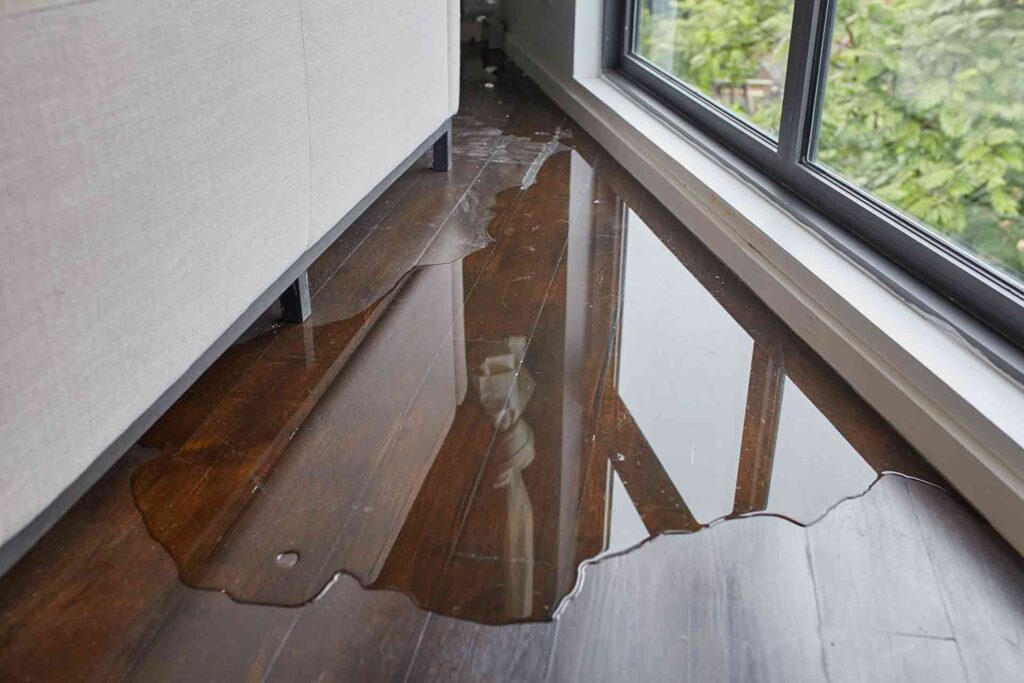
Most calls start the same way: water somewhere it should not be, and someone needs it gone. We pull it out with extraction equipment, whether it came from a burst pipe, an overflowing fixture, or water that walked in from outside during a storm.
If the water carries sewage or any contamination, that is a different job with different handling, and we treat it that way from the start. Once the standing water is gone, we map the moisture, meaning we find out how far it traveled into walls, subfloor and framing, because water migrates well past where you can see it with your eyes. Drying is monitored, not guessed at, and we document the damage as we go, room by room, for your own records and for whoever is handling your claim. Where walls, floors or finishes were damaged, we repair them.
Half the homes in Lawrenceville were built in 1987 or earlier, and about 31% go back before 1980. Older framing and subfloor soak up water differently than new construction. Original plaster, older plywood subfloor and decades-old insulation hold moisture longer and often hide it better, which means a house that looks dry on the surface can still be wet three inches into the wall.
The work follows the IICRC S500 standard, which is the industry standard for water damage restoration in homes and commercial buildings. In practice that means moisture readings guide the drying, not a calendar, and the job is not called finished until the numbers say so, not until the carpet feels dry underfoot. The EPA says materials dried within 24 to 48 hours will, in most cases, not grow mold, so that window is the one we are working against on every call.
One thing you can check yourself tonight: look under sinks and around the water heater for a slow drip or a damp subfloor. A small leak caught early is a mop and a fan. The same leak ignored for a week is a subfloor replacement. Also worth knowing before anything happens: most homeowners insurance does not cover flood damage on its own. Flood coverage is a separate policy, and an adjuster will want to know whether your water came from a pipe inside the house or from rising water outside it, because that distinction decides which policy, if any, applies.


Gwinnett County has been named in 9 federal disaster declarations for storms, flooding or fire since 2000, most recently Hurricane Isaias in 2026, a severe winter storm in 2026, and Hurricane Helene in 2024. That is not a county that gets one bad storm a decade and otherwise forgets about it. It is a place where named storms and winter weather both show up on the record.
After one passes through, the hours right after matter more than people expect. Check crawlspaces, basements and anywhere water could have pushed in around doors or foundation cracks. If you find standing water or a damp smell that was not there before, that is the point to call rather than wait and see. We answer calls 24/7, and in an emergency a crew typically arrives within the hour.
About 49% of occupied homes in Lawrenceville are owner-occupied, and the rest are rented. That split changes the first phone call more than people expect. An owner is usually deciding on repairs and insurance at the same time water is still being pumped out. A renter is often calling a property manager first, then us, and the documentation we provide matters to both of them, just for different reasons down the line.
Committed Restoration answers calls 24/7 and is IICRC certified, covering extraction, contaminated-water cleanup, moisture mapping and repairs for homes dealing with a leak, burst pipe, or flooding right now.
The EPA says materials dried within 24 to 48 hours will, in most cases, not grow mold, which is why drying starts with extraction and monitored moisture mapping as soon as a crew is on site, following the IICRC S500 standard.
Not necessarily. The 151 NFIP claims filed across Lawrenceville’s ZIP codes since 2000 describe the area as a whole, not any single lot, and a property’s actual flood risk depends on its grading, foundation and distance from drainage, which is why checking the city’s stormwater GIS map for your specific address tells you more than the claims count does.
Most homeowners insurance does not cover flood damage, since flood coverage is a separate policy, so an adjuster will typically ask whether the water came from inside the house, like a burst pipe, or from flooding outside it.
It can. About 31% of Lawrenceville’s housing was built before 1980 and the median home dates to 1987 or earlier, and older subfloor, plaster and insulation tend to hold moisture longer and hide it more than materials used in newer construction.
Sources: City of Lawrenceville, Stormwater Utility; US Census Bureau, American Community Survey 2023 5-year estimates; FEMA, OpenFEMA NFIP Redacted Claims; FEMA, OpenFEMA Disaster Declarations Summaries; IICRC, ANSI/IICRC S500 Standard; US EPA, A Brief Guide to Mold, Moisture and Your Home; FEMA, FloodSmart (National Flood Insurance Program). Read 2026-11-14.