
Water Damage Restoration in Auburn, GA





Half the homes in Auburn went up in 1992 or earlier, which means a lot of the pipe, flashing and subfloor in this town has been doing its job for three decades or more without anyone thinking about it. That’s fine until a supply line lets go behind a wall or a roof valley starts weeping during a storm, and then the age of the house is the whole story. We’ve been called out to enough of these to know where the water goes and what it does once it gets there.
What actually goes wrong in an Auburn house
A house built before 1980 (about 14% of Auburn’s stock) was plumbed and roofed to a different standard than one built last decade, and the materials behind those walls have had forty-plus years to fatigue. Galvanized supply lines corrode from the inside and nobody sees it until a fitting weeps or fails outright. Older roof decking and flashing details don’t always handle wind-driven rain the way newer systems do.
Barrow County has been named in 9 federal disaster declarations for storms, flooding or fire since 2000, most recently Hurricane Isaias, a severe winter storm, and Hurricane Helene. That’s a county-wide count, not a prediction for any one address, but it tells you this area sees real weather on a regular basis, not just the occasional afternoon thunderstorm.
Flooding itself looks different. FEMA’s records show only 1 National Flood Insurance Program claim filed for ZIP code 30011 since 2000. Low flood-claim counts in a ZIP code don’t mean a given house can’t take on water. Most of what we see in Auburn isn’t river or creek flooding, it’s roof leaks, burst pipes, and storm intrusion through a damaged roof or window, which a standard flood claim wouldn’t even capture.
Getting a crew to your door
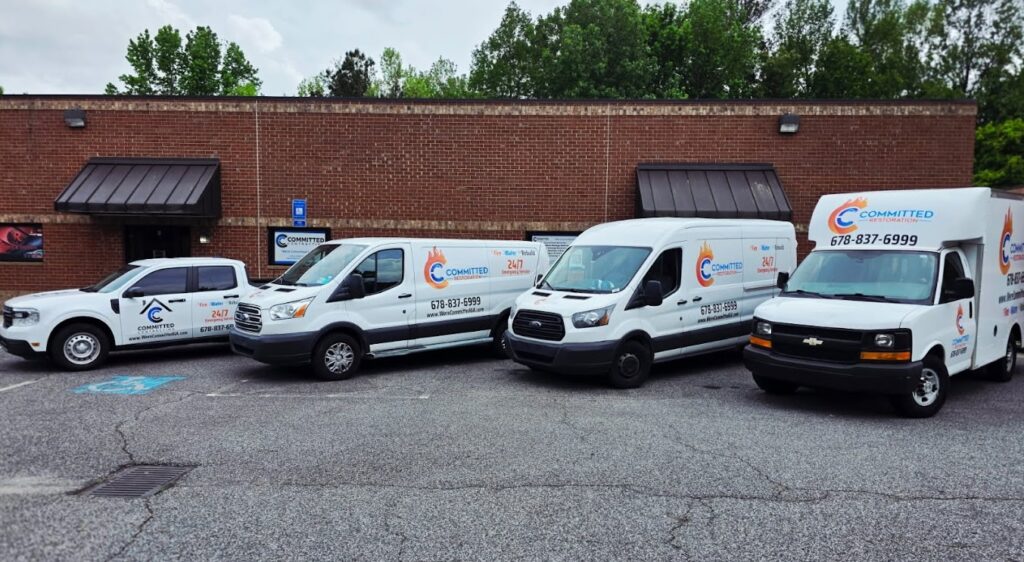
We run out of Lawrenceville, which puts us close enough to Auburn that in an emergency a Committed Restoration crew typically arrives within the hour. That’s our target for emergency calls here, not a guarantee of a specific minute, and conditions on the road or the scope of the job can change things. We answer calls 24/7, so whether the pipe lets go at 2pm on a Tuesday or 2am on a Sunday, someone picks up.
What we handle on an Auburn call
Water damage restoration
Extraction after a leak, an overflow or storm intrusion, with moisture mapping so we know what’s actually wet before we start pulling anything apart. In a house built before 1992, that mapping often turns up water that traveled further than you’d guess through old subfloor and insulation. We handle sewage and contaminated-water cleanup too, document everything for the adjuster, and repair the walls, floors and finishes once the structure is dry.
Water damage restoration in Auburn
Water mitigation
Mitigation is the part that happens before repairs even start: pulling standing water, removing wet materials that won’t dry out in place, and setting drying equipment that we monitor with moisture readings until the numbers say the structure is actually dry, not just dry to the touch. We run this 24/7 because the faster it starts, the less gets torn out later.
Fire damage restoration
After a fire, the first job is securing the property with board-up and tarping so the weather doesn’t finish what the fire started. From there we remove fire-damaged materials, clean up the water the fire department used to put it out, document the damage for the adjuster, and rebuild the rooms that took the loss.
Fire damage restoration in Auburn
Smoke damage cleanup
Soot gets into places you wouldn’t expect, including the HVAC runs that carried smoke through the house while it was circulating. We clean soot off walls, ceilings and contents, run odor removal, clean the HVAC-affected areas, and replace what’s too damaged to clean.
Smoke damage cleanup in Auburn
Mold removal and remediation
Every mold job starts with finding the moisture source, because removing mold without fixing what fed it just buys you a repeat visit. We contain the area, remove mold-damaged materials, then clean and dry the space to keep it from coming back. Given how much of Auburn’s housing has older plumbing prone to slow leaks, that moisture-source step matters more here than it sounds.
Mold removal and remediation in Auburn
Contents pack-out and storage
When a room has to be gutted, we pack out the belongings first: cleaning what’s salvageable, storing it securely, and keeping an inventory of everything that left the house. When the rebuild’s done, we organize the move-back so you’re not the one hauling boxes.
Contents pack-out and storage in Auburn
Storm damage cleanup and repair
After wind or a fallen tree, we board up and tarp the roof first to stop more water getting in, then remove water that already made it inside. Debris cleanup and structural repairs follow. With nine federal disaster declarations on Barrow County’s record since 2000, storm work is a steady part of what we do here.
Storm damage cleanup and repair in Auburn
Reconstruction after damage
Structural repairs, drywall, flooring and interior finishes, all handled by the same team that did the cleanup, so nobody has to re-explain the job to a second contractor halfway through.
What happens next

Step 1
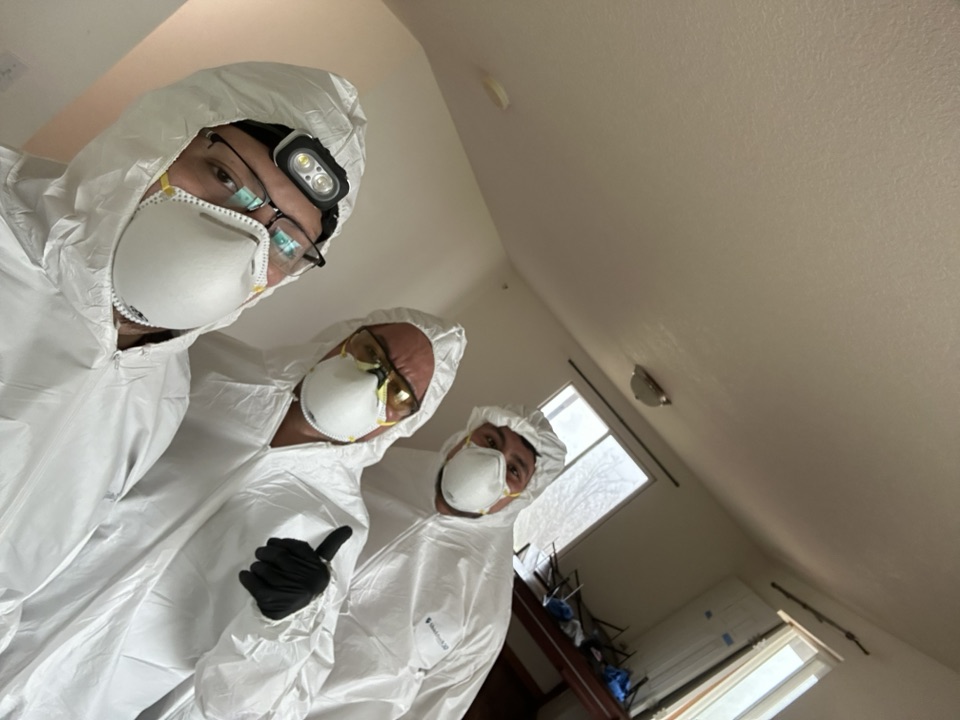
Inspect the affected areas and address immediate stabilization needs.
Step 2
Document the damage and explain cleaning, drying, and repair options.
Step 3
Carry out the agreed cleanup and prepare the space for repairs.
Step 4
Complete reconstruction, coordinate contents return, and answer remaining questions.
Opening up a 1990s-era Auburn house
With half of Auburn’s homes built in 1992 or earlier, and about 14% older still, a lot of the work here is as much about knowing what’s behind the wall as it is about drying it out. Drywall and insulation from that era behave predictably once we know the build year, but you don’t find that out until you open the wall. About 81% of occupied homes in Auburn are owner-occupied, which matters for one practical reason: an owner can authorize work and sign off on scope on the spot, where a rental often needs the landlord looped in before we can start demo. Permits for structural and electrical work go through the local building department, same as anywhere in Barrow County, and we pull what the job requires before we close the walls back up.
Questions from Auburn
Is there a 24 hour restoration company near Auburn?
Yes. Committed Restoration answers calls 24/7, and for emergencies in Auburn a crew typically arrives within the hour from our Lawrenceville office.
Who handles water, fire, smoke and mold damage in Auburn?
One crew handles all of it here: water damage restoration and mitigation, fire and smoke damage restoration, mold removal, contents pack-out, storm cleanup and the reconstruction that follows, so you’re not juggling separate contractors for each piece.
Will you talk to my insurance adjuster?
We document the damage as we find it so you have records to bring to your adjuster, including photos and moisture readings where relevant. Whether a given loss is a homeowners claim or something else is a question for your insurer, not us.
Does Auburn flood a lot?
FEMA’s records show only 1 NFIP claim filed for ZIP code 30011 since 2000, which is a low count for the area, but that number describes the ZIP code as a whole and doesn’t tell you what any one property will do in a given storm.
How old are most Auburn homes, and does that matter for repairs?
Half of Auburn’s homes were built in 1992 or earlier, and about 14% date to before 1980, which means older plumbing, wiring and roofing details show up often once we open a wall. About 81% of homes here are owner-occupied, so most of the time the person authorizing the repair is the person living in the house.
Get restoration help in Auburn
Serving Homes & Businesses Across Auburn, GA
Serving Auburn, Lawrenceville & the Greater Atlanta Metro
More help in Auburn
- Water damage restoration in Auburn
- Water mitigation in Auburn
- Fire damage restoration in Auburn
- Smoke damage cleanup in Auburn
- Mold removal and remediation in Auburn
- Contents pack-out and storage in Auburn
- Storm damage cleanup and repair in Auburn
- Reconstruction after damage in Auburn
Nearby
Sources: US Census Bureau, American Community Survey 2023 5-year estimates; FEMA, OpenFEMA NFIP Redacted Claims; FEMA, OpenFEMA Disaster Declarations Summaries. Read 2026-11-14.